Cats are highly sensitive to sound. They hear a wider range of frequencies than people and most dogs. The ear controls both hearing and balance and has three parts: the outer, middle, and inner ear.
Outer ear: This includes the pinna (the flap of cartilage covered by skin and fur) and the ear canal. The pinna collects sound and directs it down the canal to the eardrum. The left and right pinna can move independently, helping cats locate sounds. A cat’s ear canal is deeper than a human’s and funnels sound better but can trap dirt and wax. This buildup can cause inflammation (swelling and redness) and infections, although cats tend to have less of these problems than dogs.
Middle ear: This contains the eardrum and an air-filled chamber with three tiny bones, two small muscles, an opening called the oval window, and the auditory tube. The auditory tube connects the middle ear to the back of the nose to allow air into the middle ear.
Inner ear: This includes the cochlea (the hearing center) and the system that controls balance. The semicircular canals are fluid-filled structures and part of the system that helps maintain cats' agility and excellent balance.

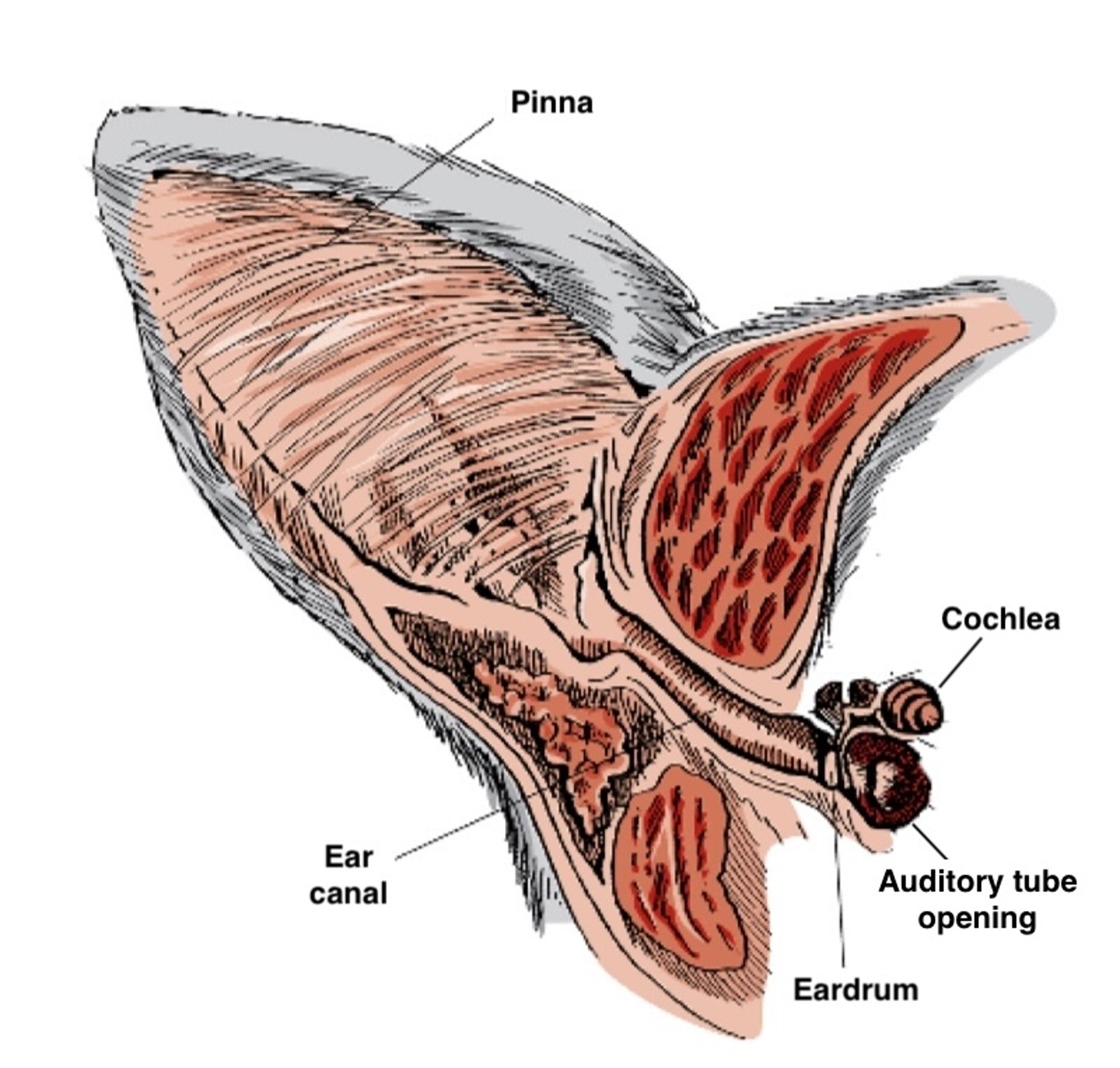
Physical Examination of the Ear
Veterinarians check cats’ ears at routine visits. Be sure to let the vet know if your cat has a history of ear infections or ear problems.
First, the vet inspects the outer ear for inflammation, trauma, swelling, discharge, or excess wax. Then they use a tool called an otoscope to see into the ear canal and eardrum. A video-otoscope (an otoscope with a camera) projects the picture seen through the otoscope on to a screen for better visualization.
Sedation or general anesthesia might be needed if the ear is painful or the cat is hard to restrain. Ear fluid or discharge can be examined under the microscope for mites, yeast, or bacteria to guide treatment.
Suspected tumors might require a biopsy. Additional tests (x-rays, CT, MRI, or electronic hearing tests) may be used to confirm conditions such as deafness.