Swine parakeratosis manifests as crusty, scaly lesions of the skin in predominantly ventral locations on the body, as a result of absolute or relative dietary zinc deficiency. Diagnosis is by clinical signs, feed analysis, and histopathological examination. Treatment involves provision of dietary zinc adequate for ingestion and absorption, and it typically results in a good prognosis.
Swine parakeratosis is a nutritional skin disorder of growing swine. The condition results from inadequate zinc, either from a deficiency or altered absorption caused by excess calcium, phytates, or other chelating agents in the diet. Predisposing factors for parakeratosis include rapid growth, deficiency of essential fatty acids, or malabsorption of zinc due to GI disease.
Parakeratosis is uncommon in commercial swine production; however, it can occur in backyard pigs. The use of swine diets high in zinc for prevention of enteric disease has decreased the incidence of parakeratosis in commercial production. Cases of parakeratosis in commercial swine are usually due to diet formulation errors.
Skin changes in swine parakeratosis first present as coalescing erythematous macules or papules on the hindlegs, ears, face, or ventral abdomen, and progress to crusts or dark brown scales with underlying dermal hyperplasia (see and ). Lesions are characterized by excessive and abnormal keratinization of the epidermis and the formation of horny scale. Lesions are often symmetrical and are nonpruritic. Skin scales are dry but can break open, resulting in hemorrhage or serosanguinous exudate.

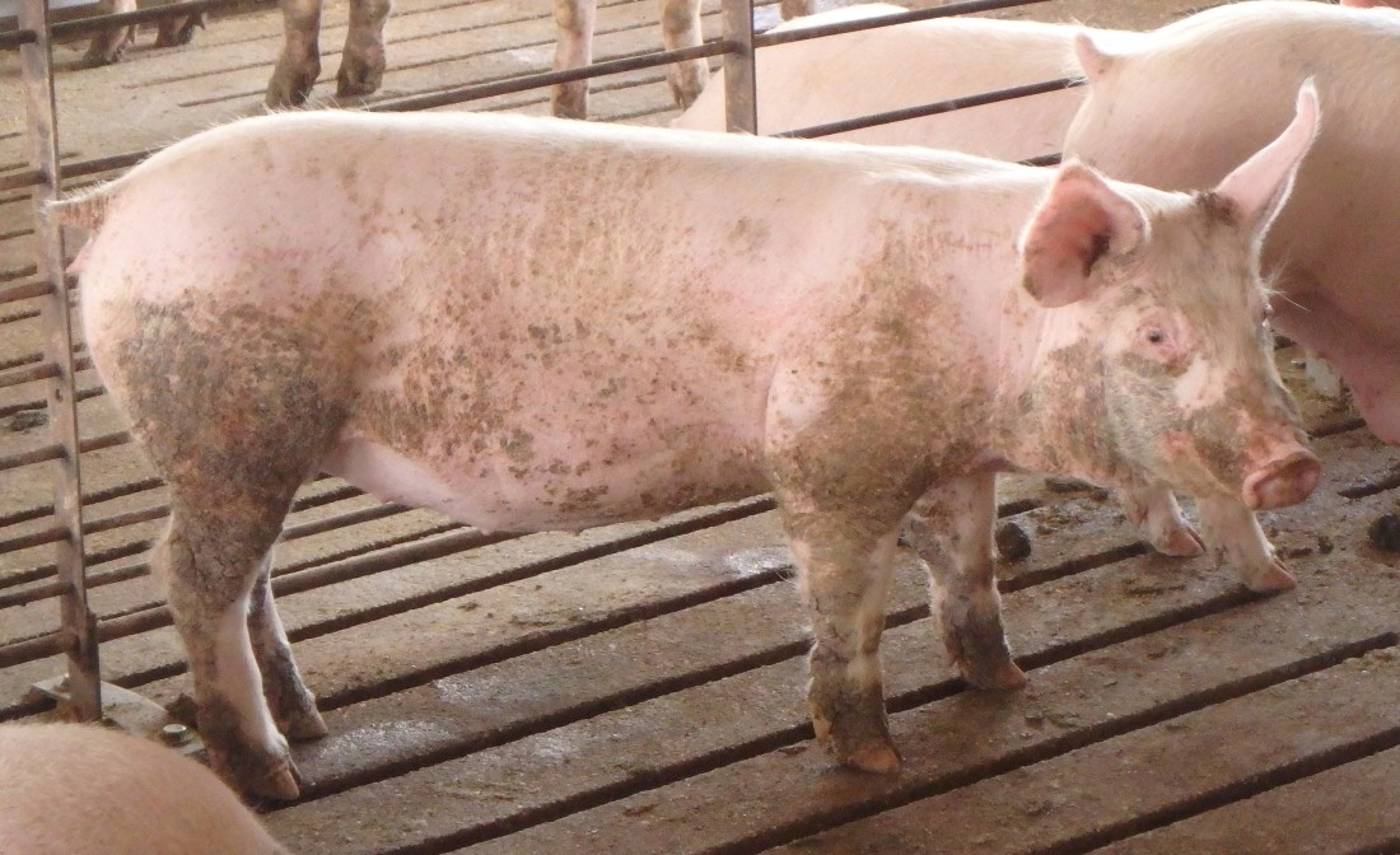
Pig with parakeratosis lesions. Note that the lesions are confined to the lower and ventral abdomen, thorax, limbs, and feet, which is typical of the disease.
Courtesy Dr. Scott Radke.

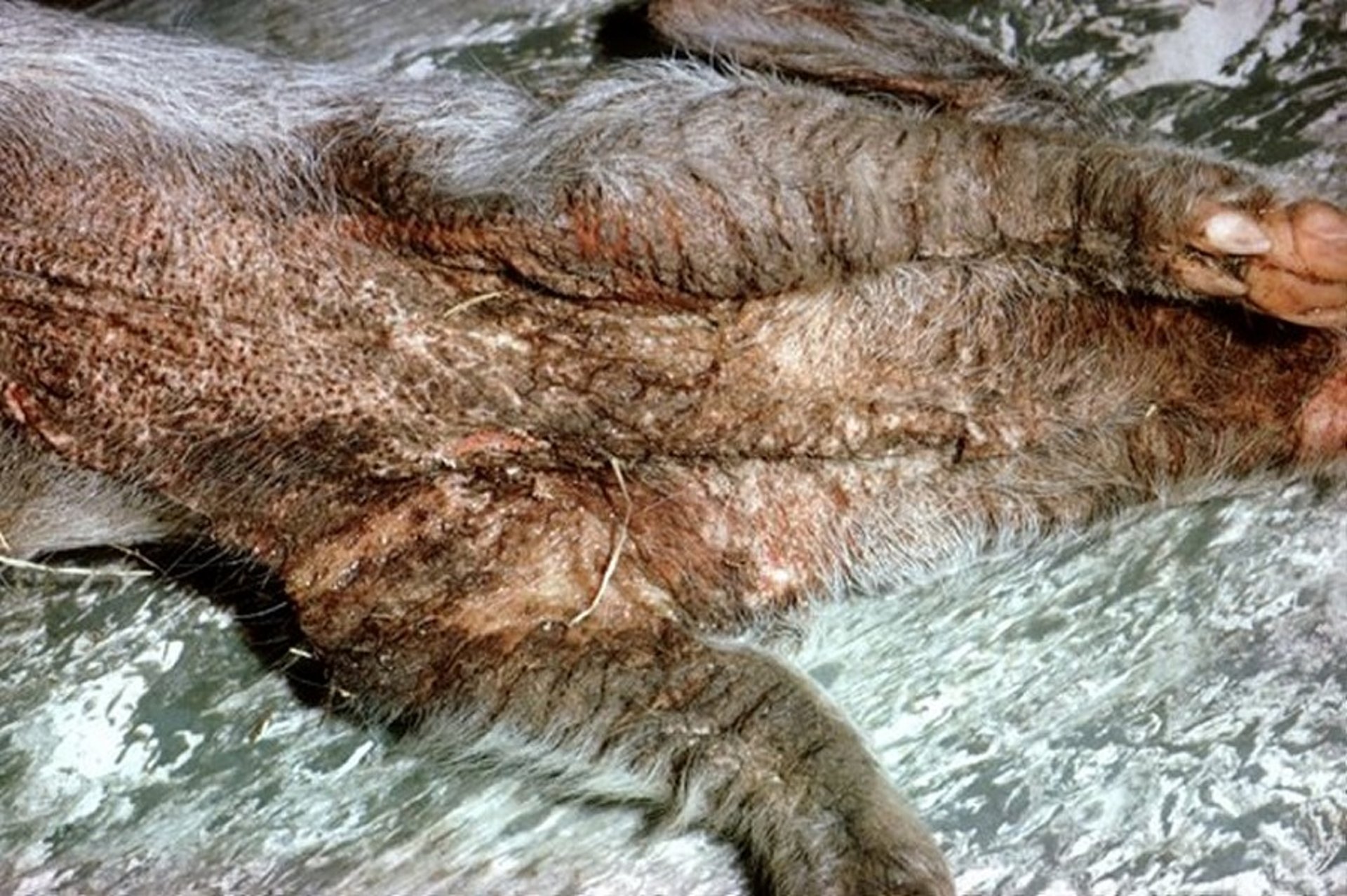
Ventral thorax and forelimbs of a pig with parakeratosis. Note the many deep, dry, crusty lesions.
Courtesy of Dr. Ranald D. A. Cameron.
Anorexia, delayed growth, diarrhea, and vomiting can also occur. Secondary bacterial infection of the cracks, fissures, and breaks in the skin is common and can resemble exudative epidermitis.
Differential diagnoses for skin lesions of swine parakeratosis include the following:
Histological evaluation of skin samples is vital for confirming a diagnosis of swine parakeratosis. Antemortem dermal punch biopsy specimens are useful and can be paired with feed analysis, serum zinc concentration, and decreased serum ALP activity for a definitive diagnosis. Postmortem liver sampling is another useful method of diagnosis, as the liver is the major storage organ for zinc in the body and directly reflects the animal's overall nutritional status.
Swine parakeratosis responds rapidly to zinc supplementation. Full resolution of skin lesions usually occurs in 14–21 days.
For dietary standards for zinc, calcium, and phosphorus, see Nutritional Requirements of Pigs and the tables and .
For More Information
Radke S, Forseth A, Hoogland M, et al. Zinc responsive parakeratosis in growing pigs. J Swine Health Prod. 2024;32(1):17-21.
Gebhardt JT, Tokach MD, Goodband RD, et al. Nutrient deficiencies and excesses. In: Zimmerman JJ, Burrough ER, Karriker LA, Schwartz KJ, Zhang J, eds. Diseases of Swine. 12th ed. Wiley; 2025:1195-1214.