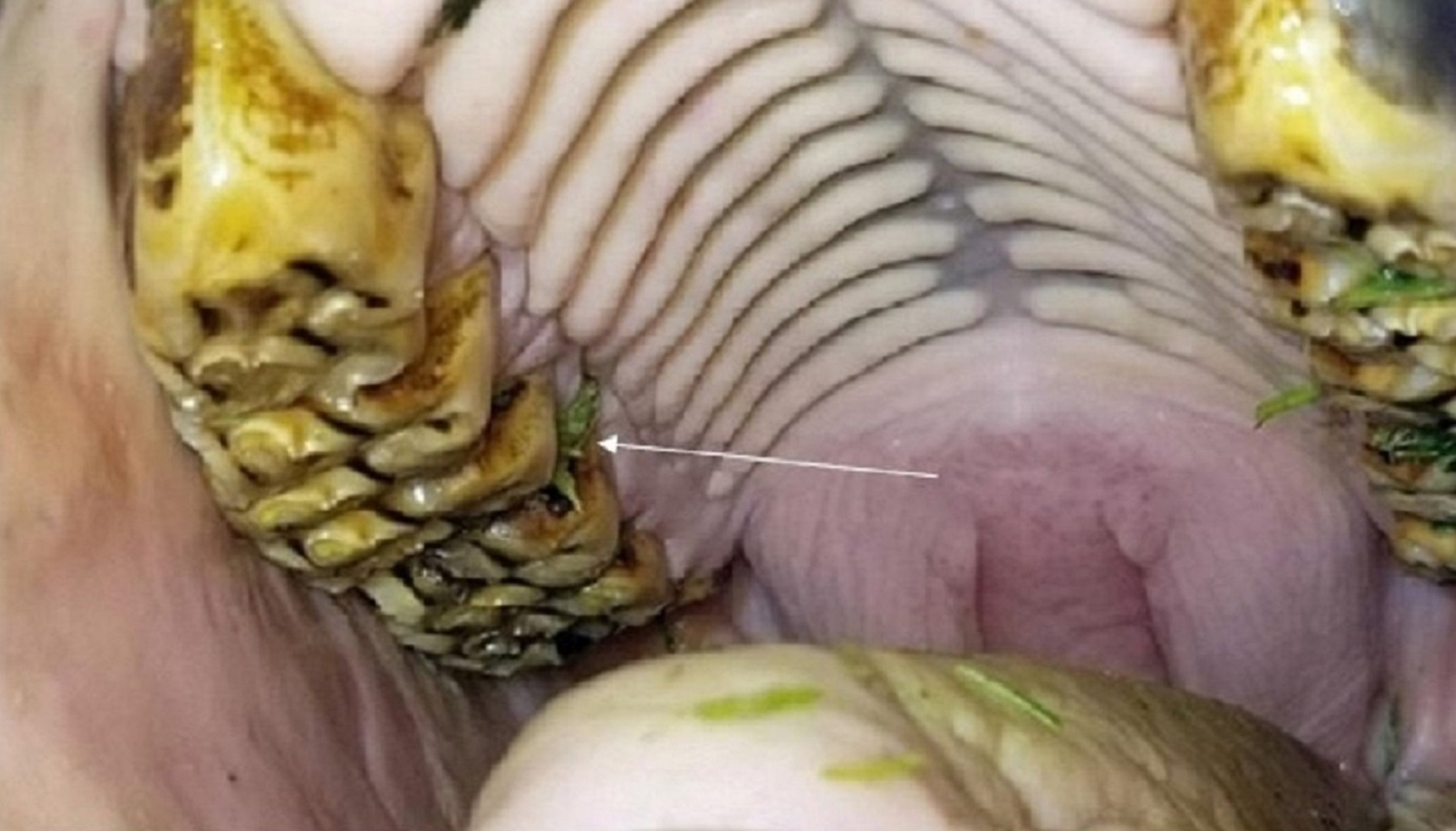
This oral photograph shows forage packing in a diastema and bone loss between teeth 108 and 109 (white arrow).
Courtesy of Dr. Jack Easley.


Open-mouth 20-degree dorsal right-to-left oblique radiograph of a horse, showing diastemata and bone loss between teeth 108 and 109 (white arrow) and between teeth 307 and 308 (yellow arrow).
Courtesy of Dr. Jack Easley.


Dorsoventral radiograph showing open diastemata (arrows) between the last premolar and first molar on both the right and left upper arcades in a horse.
Courtesy of Dr. Jack Easley.
Periodontal disease is common in older horses and is almost always associated with diastemata (gaps) that form between cheek teeth and/or incisors. Successful management includes correcting dental wear abnormalities and cleaning out trapped feed. The stage of disease can be gauged by the amount of attachment that has been lost between the tooth and the dental socket. Severe cases of periodontal disease, with unstable teeth, usually benefit from oral extraction.