Miodegeneração nutricional
Young, rapidly growing foals born to dams that consumed selenium-deficient diets during gestation can develop nutritional myodegeneration. Selenium deficiency has also been implicated in masseter muscle myopathy and occasionally nonexertional rhabdomyolysis in adult horses. Selenium and vitamin E appear to be synergistic in preventing nutritional myodegeneration.
Clinical signs in foals include dyspnea; a rapid, irregular heartbeat; and sudden death in those with myocardial involvement. Dysphagia, muscle stiffness, trembling, firm muscles, difficulty rising, and myoglobinuria may also occur. Aspiration pneumonia is a frequent complication.
Diagnosis is based on finding moderate to markedly increased serum CK and AST activities, combined with low whole blood selenium (< 0.07 mcg/mL) or vitamin E (< 2 mcg/mL) concentrations. Hyperkalemia, hyperphosphatemia, hyponatremia, hypochloremia, and hypocalcemia can occur with severe rhabdomyolysis when the normal distinction between extracellular and intracellular compartments is destroyed by massive tissue necrosis. Selenium-dependent glutathione peroxidase formed in RBCs during erythropoiesis also provides an index of body selenium status.
Treatment includes selenium (0.055–0.067 mg/kg, IM, once) and vitamin E (0.5–1.5 U/kg, IM, IV, or PO, repeated as needed at 5- to 10-day intervals). Supportive treatment includes administering antimicrobials to combat secondary pneumonia, feeding via nasogastric tube, providing adequate energy intake, and maintaining fluid and electrolyte balance.
Miopatia responsiva à vitamina E

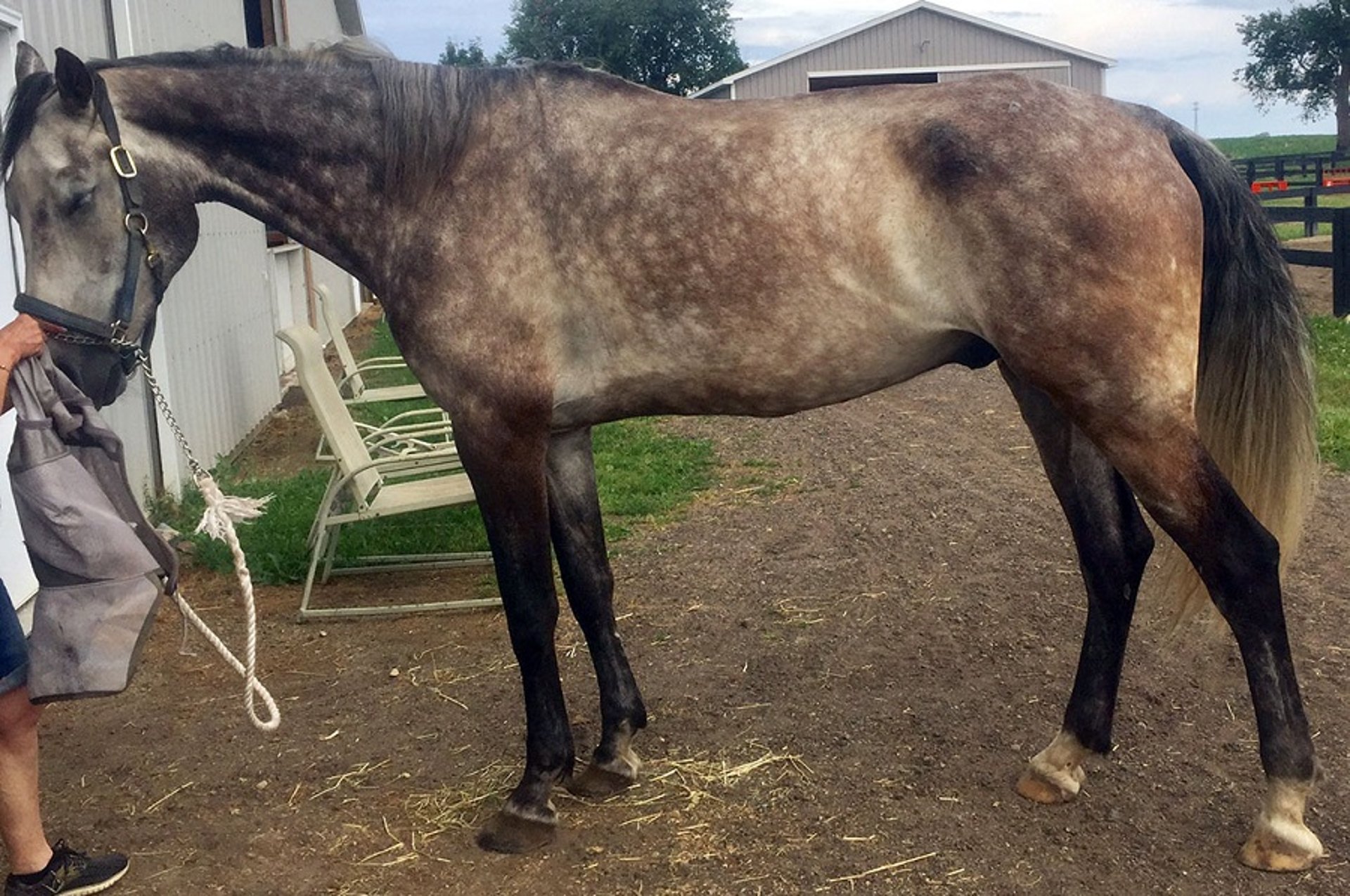
This photograph shows a Warmblood with vitamin E–responsive myopathy. Note the generalized muscle atrophy with associated weakness.
Courtesy of Dr. Stephanie Valberg.
Horses with long-standing vitamin E deficiency can develop two disorders that cause muscle atrophy. Equine motor neuron disease (EMND) occurs when vitamin E deficiency causes a neuropathy with degeneration of the motor nerves. Vitamin E–responsive myopathy (VEM) is a muscle disorder that can initially present as decreased performance and gradual muscle loss or as a sudden onset of muscle weakness and trembling. Atrophy with VEM appears to be related to oxidative stress in muscle fibers and will resolve with treatment of 5000 U/day of natural vitamin E. Serum a-tocopherol concentrations can be low or within the normal range. A diagnosis is established via a biopsy of the sacrocaudalis dorsalis medialis muscle that shows an abnormal pattern of staining for mitochondria and anguloid muscle fiber atrophy.
Para obter mais informações
Also see pet health content regarding muscle disorders in horses.