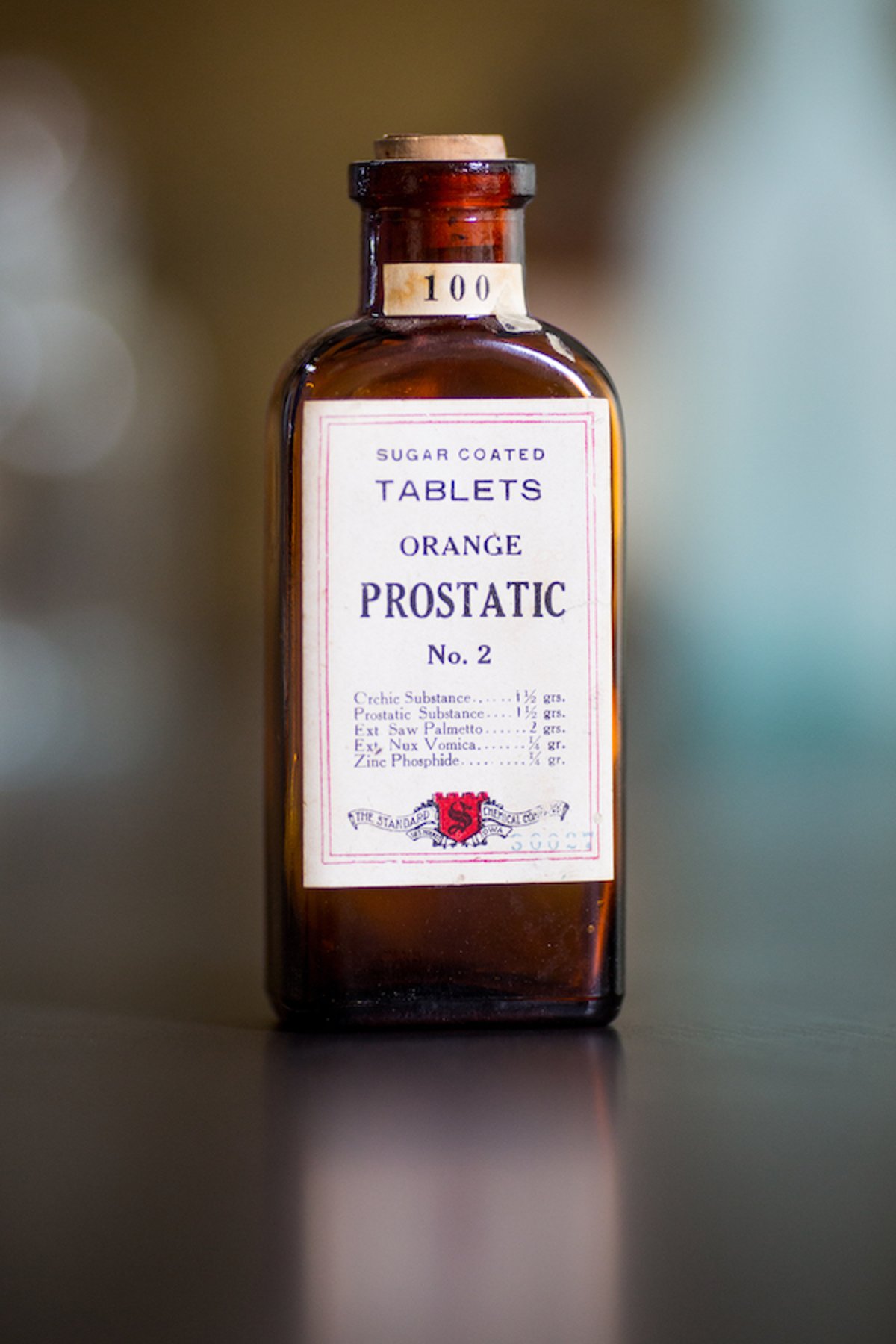
Photograph, Antique remedy - The highly simplistic and potentially dangerous premise of “glandular” medicine recommends: “To treat a gland, eat a gland.” Thus, for brain disease, eat brain. For spinal cord deterioration, eat spinal cord. Typically, the glands consumed belonged to bovine, ovine, or porcine species, clearly introducing the risk of disease transmission, such as spongiform encephalopathy. Notwithstanding the absence of scientific justification, glandular therapy persists among some “holistic” medicine providers. This bottle of “Orange Prostatic No.2” tablets contains not only derivatives of testes and prostate but also strychnine (nux vomica) extract.
Courtesy of Dr. Narda Robinson.
Nutraceuticals comprise foods, or extracts from foods, that supposedly confer medicinal benefits. Nutraceuticals have become popular with the veterinary community; annual expenditures exceed USD 1.3 billion. Such economic success has, for the most part, not been accompanied by scientific evidence of efficacy. As with herbs, a broad and continually expanding spectrum of nutraceuticals exists. However, their mechanisms of action, indications, contraindications, adverse effects, and evidential support vary with the product and species. It is beyond the scope of this brief summary to discuss specific nutraceutical products.
One type of nutraceutical in particular warrants mention. “Glandulars,” “tissue extracts,” or other scientific-sounding equivalent names purportedly improve the health of animals in which the same glands or tissues have become dysfunctional. Although these products are not FDA approved for veterinary usage, veterinary glandulars and related supplements have been heavily promoted in the lay animal health literature. Their usage began in the USA during the late 19th century when the practice arose of giving fresh thyroid glands to patients as treatment for hypothyroidism. Subsequently, tissues and extracts from other organs (ovary, adrenal, testis, thymus, brain, prostate, etc.) became popular treatments. Once standardized medications and hormonal replacements became available, medical practitioners largely ceased prescribing glandular derivatives because medication offered more reliable effects without the unpredictable hormonal effects of extracts and concentrates. The use of raw bovine pancreas in some dogs with exocrine pancreatic insufficiency is a notable exception. Of specific concern with spinal cord and brain "glandulars" is the potential for these CNS derivatives to transmit spongiform encephalopathy.
For More Information
Also see pet health content regarding complementary and alternative therapies for pain.