Rickets is a disorder that affects the skeleton of growing animals. Primary causes are insufficient dietary phosphorus or calcium, an inappropriate ratio between these minerals in the diet, or insufficient availability of activated vitamin D. Genetic defects affecting genes that encode proteins involved in vitamin D metabolism or in the renal handling of calcium and phosphorus have also been reported, Diagnosis is based on clinical signs in combination with the identification of predisposing nutrient deficiencies. Blood biochemical analysis for mineral and vitamin D levels, radiography of long bones, and bone biopsy help to confirm the diagnosis. Treatment consists of addressing dietary imbalances and ensuring sufficient exposure to sunlight.
Rickets is a disease of the bony growth plate and thus affects only young, growing animals. The most common causes are dietary insufficiencies of phosphorus or vitamin D. Calcium deficiencies can also cause rickets, and although calcium deficiency rarely occurs naturally, poorly balanced diets deficient in calcium have been said to cause rickets.
As with most diets that cause osteodystrophies, an abnormal calcium:phosphorus ratio is the most likely cause of rickets.
Clinical Findings and Lesions of Rickets
The characteristic lesions of rickets are failure of both vascular invasion and early ossification of the physis. This hallmark sign of rickets, independent of the primary cause, is most obvious in the metaphyses of the long bones.
Rickets has a wide variety of clinical signs, including the following:
bone pain
stiff gait
swelling of the metaphyses
difficulty in rising
bowed limbs
bone fractures (see )

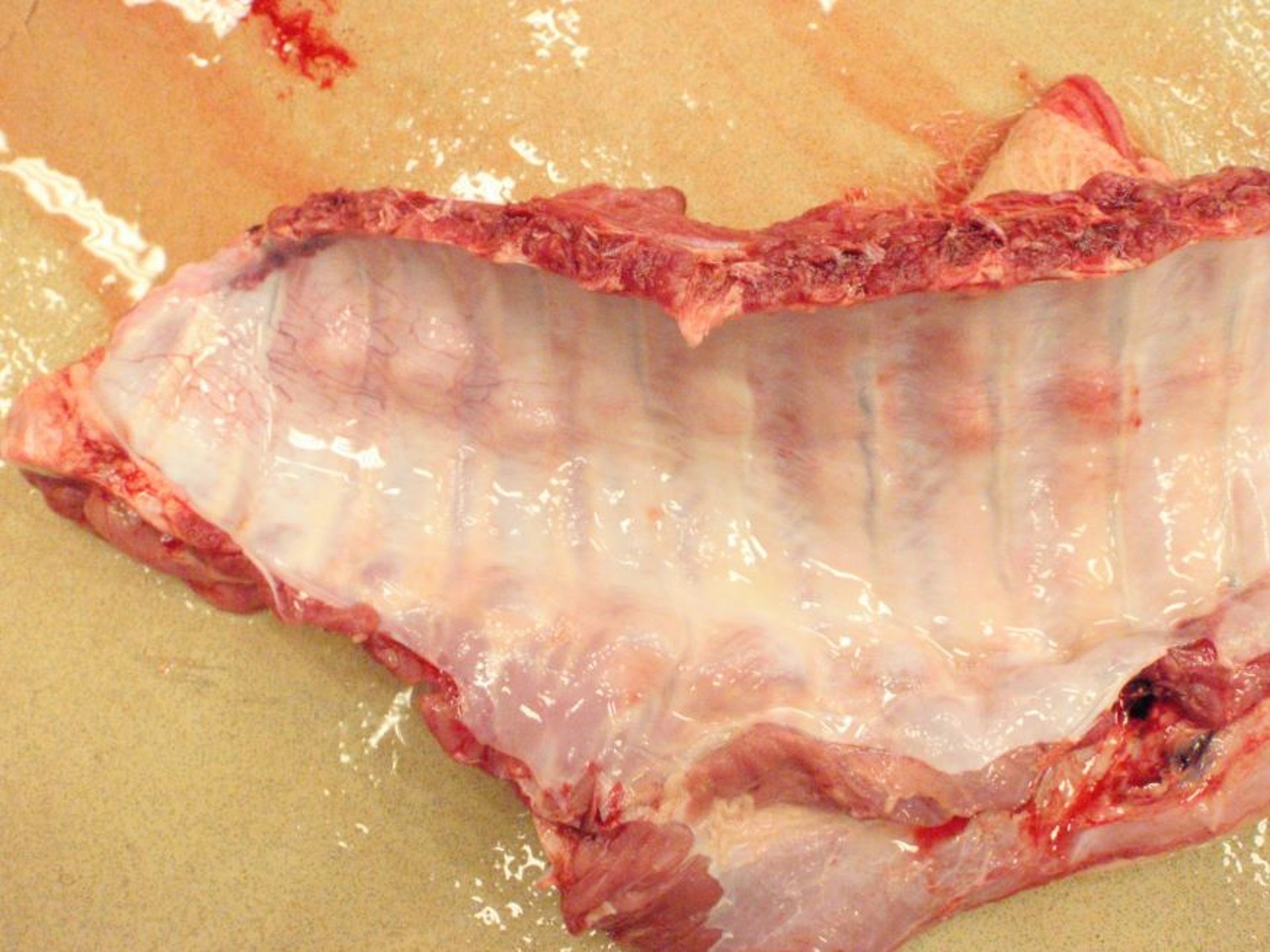
Necropsy photograph showing multiple callus bone formations on the rib cage of a pig resulting from fractures due to a vitamin D deficiency.
Courtesy of Iowa State University Veterinary Diagnostic Laboratory.
Radiography in rickets cases shows an increase in the width of the physes, distortion of the nonmineralized physeal area, and sometimes decreased radiopacity of the bone. In advanced cases, angular limb deformity might result from asynchronous bone growth.
Pearls & Pitfalls
|
Animals fed all-meat diets are commonly affected by rickets. Kittens fed exclusively beef heart develop locomotor disturbances within 4 weeks, even though the high content of digestible protein (> 50% on a weight basis) and fat promotes rapid growth, the animals appear well nourished, and their coat maintains a good luster (1). The predominant clinical signs of rickets in kittens are reluctance to move, hindlimb lameness, and ataxia. Affected kittens often stand with characteristic deviation of the paws. Skeletal disease becomes progressively more severe after 5–14 weeks.
Kittens with rickets become quiet and reluctant to play; they assume a sitting position or sternal recumbency with the hindlimbs abducted. Normal activities can lead to the sudden onset of severe lameness as a result of incomplete or folding fractures of one or more bones.
Lameness is the initial functional disturbance caused by rickets in growing dogs, and the clinical signs can vary from a slight limp to an inability to walk. The bones are painful on palpation, and folding fractures of long bones and vertebrae are common.
Diets with excessive amounts of calcium (3 times normal concentrations) have caused ricketslike signs in growing Great Danes. Several other bone disorders (retained cartilaginous cores, osteochondrosis, and stunted growth) were also evident in these dogs (2).
Swine kept in confined housing are susceptible to rickets because of their rapid growth rate, combined with lack of exposure to sunlight. An inherited form of rickets has been described in pigs that is indistinguishable from the nutritive form of the condition. In affected herds, an increased number of animals have a cautious gait or display lameness and bending, bowing, or spontaneous fracturing of long bones.
In ruminants, deficiency of activated vitamin D is generally attributed to a lack of exposure to sunlight and, to a lesser extent, to dietary phosphorus deficiency. In Corriedale sheep, a gene defect associated with enhanced degradation of activated vitamin D has been reported (3).
Diagnosis of Rickets
Clinical signs
Radiography
Serum biochemical testing
The typical microscopic lesion associated with rickets is impaired endochondral ossification, which is most prominent in fast-growing bones. Growth plates are widened and irregular, and joints appear enlarged. The trabeculae of cancellous bone are thinner, predisposing these bones to infarctions and hemorrhage.
Radiography of large bones and joints is the most reliable in vivo diagnostic tool for rickets. The radiopacity of rachitic bones is characteristically less than that of normal bone. Growth plates appear widened and irregular.
Plasma alkaline phosphatase activity is commonly increased in cases of rickets. Concentrations of serum calcium, phosphorus, and vitamin D can be altered, depending on the primary cause of rickets. In cases associated with phosphorus or vitamin D deficiencies, concentrations of these compounds in serum are subnormal, while PTH levels in blood might be unremarkable.
Hypocalcemia, in combination with elevated concentrations of blood PTH, is indicative of calcium deficiency as the primary etiology of rickets. Analysis of urine phosphorus can help differentiate phosphopenic rickets, which is an alternative form attributable to deficient phosphorus uptake caused by renal phosphorus wasting.
Treatment of Rickets
Correction of underlying dietary or vitamin D deficiencies
The first step in treating rickets is to identify and address the underlying dietary or vitamin D deficiencies. Correction of the diet is the primary treatment.
If animals with rickets are housed, exposure to sunlight (UV radiation) also increases the production of vitamin D3 precursors. The prognosis in cases of rickets that are not accompanied by fractures or irreversible damage to the physes is good.
Many homemade diets for dogs are deficient in minerals and have altered calcium:phosphorus ratios. Therefore, high-quality commercial foods, or diets designed by a credentialed veterinary nutritionist, are recommended.
Key Points
Rickets is a metabolic disorder, caused by inadequate calcium, phosphorus, or vitamin D, that affects the skeleton of growing animals.
Endochondral ossification of the physis is impaired in rickets.
Clinical features include metaphyseal swelling, lameness, and sometimes fractures.
For More Information
References
Lenox C, Becvarova I, Archipow W. Metabolic bone disease and central retinal degeneration in a kitten due to nutritional inadequacy of an all-meat raw diet. JFMS Open Rep. 2015;1(1):2055116915579682. doi:10.1177/2055116915579682
Schoenmakers I, Hazewinkel HAW, Voorhout G, Carlson CS, Richardson D. Effect of diets with different calcium and phosphorus contents on the skeletal development and blood chemistry of growing Great Danes. Vet Rec. 2000;147():652-660. doi:10.1136/vr.147.23.652
Dittmer KE, Howe L, Thompson KG, Stowell KM, Blair HT, Cockrem JF. Normal vitamin D receptor function with increased expression of 25-hydroxyvitamin D3-24-hydroxylase in Corriedale sheep with inherited rickets. Res Vet Sc. 2011;91(3):362-369. doi:10.1016/j.rvsc.2010.09.017