In growing pigs, rectal strictures are a sequela of severely traumatized rectal prolapses or of infections that interfere with rectal blood supply. The former cause sporadic cases; the latter can be epidemic. One cause is infection by Salmonella enterica serotype Typhimurium, which can manifest in an ulcerative proctitis that heals in such a manner that normal function is not restored. The stricture is reported to be the result of fibrosis of the rectal tissue due to persistent ischemia caused by infection in an area of limited blood supply.

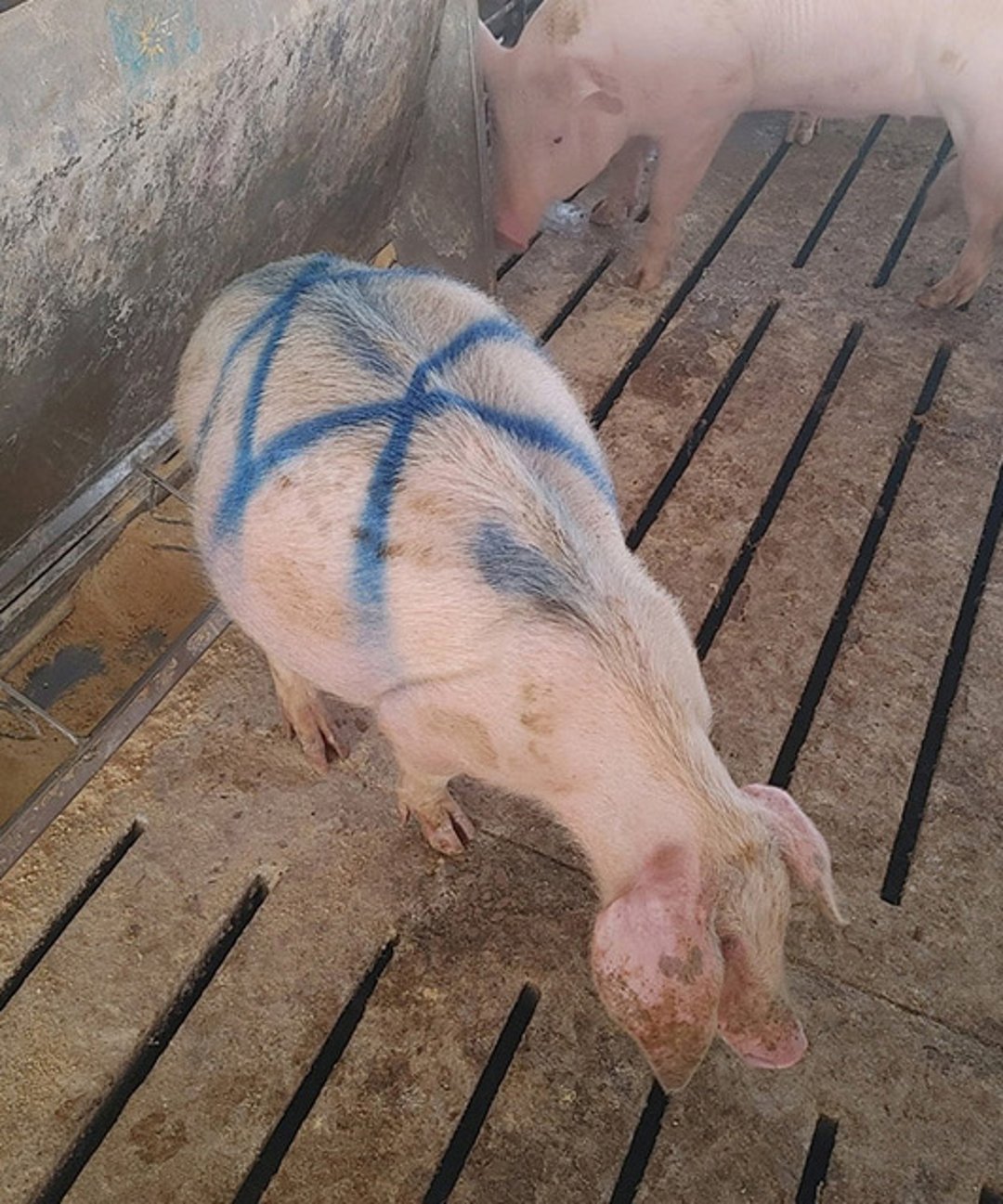
Bloat and emaciation in a pig due to severe rectal stricture. Paint marks indicate previous treatments.
Courtesy of Dr. Darin Madson.
Clinically, several bloated pigs in varying stages of emaciation are often noted within a group of growing pigs (see ). Other clinical signs of rectal strictures, including prior outbreaks of severe debilitating diarrhea, are common but not always reported. An index finger rarely can be passed into the rectum without considerable resistance. At postmortem examination, the colon is grossly distended, and the intestine is filled with gas and loose feces. The predominant lesion is a narrowed rectal canal due to annular fibrotic ulcers or rectal strictures found 2–5 cm cranial to the anus.
Early diagnosis and treatment of diarrhea is imperative for control. Good housing, management, and sanitation, with an all-in all-out management system, is the best method to prevent further outbreaks. Surgery is not typically economically feasible.
For More Information
Burrough ER, Gabler NK, Thomson JR. Digestive system. In: Zimmerman JJ, Burrough ER, Karriker LA, Schwartz KJ, Zhang J, eds. Diseases of Swine. 12th ed. John Wiley and Sons, Inc; 2026:273-301.