Hypovitaminosis C in Guinea Pigs
Guinea pigs of all ages require a dietary source of vitamin C. They are incapable of endogenous synthesis because they have a mutated gene for L-gulonolactone oxidase. A lack of vitamin C leads to defective type IV collagen, laminin, and elastin. This leads to compromised blood vessels and resulting hemorrhage, and ultimately periarticular hemorrhage and decreased joint integrity. Malocclusion can also occur as a result of a lack of collagen to anchor teeth appropriately.
Growing, lactating, pregnant, and diseased guinea pigs have higher requirements for vitamin C and can show clinical signs of deficiency more rapidly than healthy counterparts. History can include being fed rabbit pellets, old pellets, or those without a stable form of ascorbic acid. Clinical signs include anorexia or difficulty prehending food, a rough coat, lameness or paresis, swollen joints, generalized pain, and delayed wound healing.
Diagnosis is based on history and clinical signs. Radiographic examination can reveal enlarged long bone epiphyses and costochondral junctions of the ribs. Postmortem findings include hemorrhage into joints, gingiva, intestines, subcutaneous tissues, and skeletal musculature secondary to collagen abnormalities.
Treatment should include correction of the husbandry, vitamin C supplementation through parenteral or oral routes, and analgesia.
Endocrine Diseases in Guinea Pigs
Cystic ovarian disease is the most common reproductive tract disorder in guinea pig sows. The types of ovarian cysts are differentiated on histopathological evaluation and include serous (cystic rete ovarii), follicular, and parovarian. Guinea pigs may have concurrent reproductive pathology, including cystic endometrial hyperplasia, uterine leiomyoma or leiomyosarcoma, other uterine neoplasia, uterine inflammation, or mammary changes.
A wide range of clinical signs can occur and depend on the type, size, and distribution of cysts. Decreased appetite, lethargy, hunched posture, weight gain, progressive abdominal distention, and palpable masses in the abdomen are common. Follicular cysts can also present with bilateral, nonpruritic alopecia of the flank and ventral abdomen, crusting and hyperpigmentation of the nipples, clitoral hypertrophy, and behavior changes.
Cystic ovaries may be suspected on the basis of history, clinical signs, and physical examination findings. Diagnostic imaging with ultrasonography or CT can be used for confirming the disease.
The treatment of choice is ovariohysterectomy, especially if uterine disease is present, or ovariectomy if the uterus appears normal on ultrasonographic evaluation. Palliative therapy in the form of ultrasound-guided aspiration of fluid might also be an option. Medical therapy in the form of hormone administration may be considered in guinea pigs when surgery is not pursued. A summary of formulations and dosing of commercially available hormone therapies for this disease has been published (1).
Hyperthyroidism is the most common nonreproductive endocrine disorder in guinea pigs and typically occurs in animals > 3 years old. Thyroid tumors can be nonfunctional or functional in nature. Guinea pigs often develop progressive weight loss with a decrease in body condition despite a normal or increased appetite, polydipsia and polyuria, hyperactivity, nervousness, and soft feces or diarrhea, and these are confirmed on physical examination. Additional findings can include palpable, subcutaneous masses on the ventral neck, tachycardia, heart murmur, arrhythmia, and hyperesthesia.
Diagnosis can be achieved using a full thyroid panel and diagnostic imaging in the form of ultrasonography, CT, scintigraphy, or MRI. Ultrasound-guided fine-needle aspiration of the thyroid masses can also be pursued.
The recommended treatment for hyperthyroidism is radioactive iodine; surgery is more invasive and has a poorer success rate in guinea pigs. Other treatment options include drugs that inhibit hormone synthesis, such as methimazole or carbimazole; however, these drugs are not curative, and discontinuation will result in recurrence of clinical signs.
Urinary Disease in Guinea Pigs
Urolithiasis is common in guinea pigs and is caused by calcium carbonate and other crystals precipitating out of normal urine. Several factors have been suggested to increase the risk of urolith formation, such as sex and age. Females might be more at risk and are more likely to have uroliths in the lower urinary tract, including the urethra. Males are more commonly diagnosed with ureteroliths and cystoliths (2). The presenting complaint is often hematuria but might not be a urinary concern, and urolithiasis should be considered for any guinea pig with nonspecific clinical signs or those related to GI hypomotility.
Diagnosis is based on physical examination findings, diagnostic imaging, and urinalysis. Calcium carbonate uroliths are most common and can be visualized on radiographs because they are radiopaque (see and radiographs of ureteral stones). Ultrasonography is useful to determine the locations of the calculi, as distinguishing ureteroliths from cystoliths can be challenging in some cases. Ultrasonography will also allow for evaluation of changes in the kidneys or ureters, such as hydronephrosis or hydroureter, ureteral dilatation or thickening, or perforation. Hematuria is a common abnormality on urinalysis.

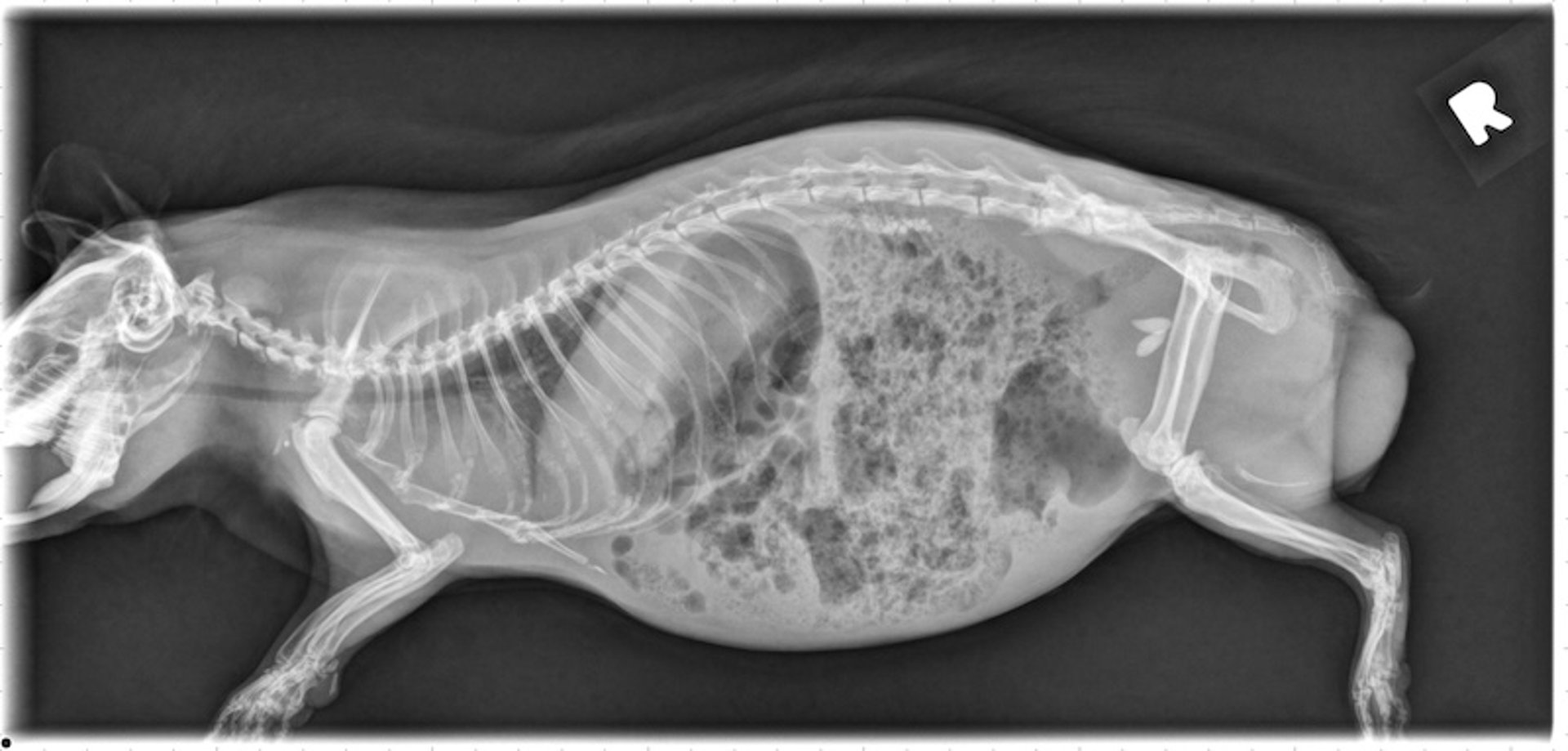
Lateral radiograph of a guinea pig with bilateral ureteral stones.
Courtesy of Dr. Miranda Sadar.

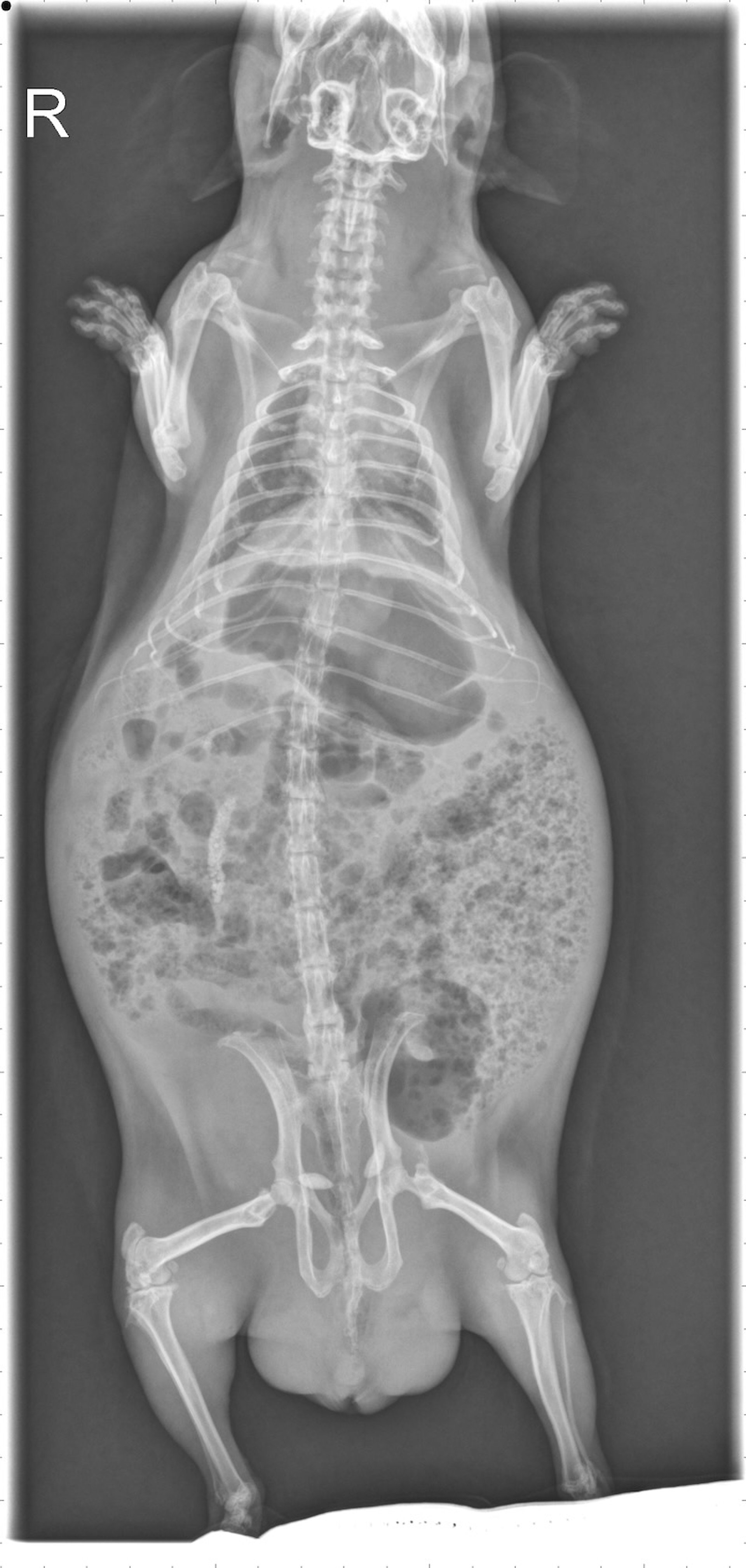
Ventrodorsal radiograph of a guinea pig with bilateral ureteral stones.
Courtesy of Dr. Miranda Sadar.
Treatment can be medical or surgical management. In cases of nephroliths or ureteroliths, medical management consisting of fluid therapy and analgesia may be elected because these locations are less amenable to surgery. Uroliths can be removed using a variety of techniques, depending on the location. Smaller urethral calculi might be accessible using a self-retaining retractor with elastic stays in female guinea pigs (3). Rigid endoscopes can also be used in female guinea pigs for cystoscopy and urolith removal (4). Surgical removal via cystotomy is necessary for larger uroliths in both sexes. Postoperative radiographs and treatment with fluids, analgesia, and supportive care are recommended. Recurrence of urolithiasis is common, and prevention is focused on increasing water intake and produce consumption.
Pearls & Pitfalls
|
Dental Disease in Guinea Pigs
The incisors, premolars, and molars of guinea pigs grow throughout life. The normal occlusal surface and length of the teeth are maintained by wearing of opposing surfaces. Malocclusion and overgrowth of the teeth are typically related to malnutrition, such as hypovitaminosis C, a lack of fiber in the diet, or other deficits in husbandry; however, trauma and genetics are also potential causes. Guinea pigs can damage their incisor teeth by pulling on cage bars or wires, which can result in tooth fracture and misalignment as it regrows.
Because of the unique, curved structure of the premolars and molars, and the associated oblique occlusal plane, diagnosis and treatment of dental disease in guinea pigs is more challenging than in rabbits. Guinea pigs with dental disease develop nonspecific clinical signs, from mild inappetence to anorexia, difficulty chewing and/or swallowing, decreased activity, weight loss, and ptyalism. If the incisors are suddenly overgrown in an adult guinea pig, the problem is often in the back of the oral cavity, and a full assessment of the premolars and molars is warranted. Overgrowth of the mandibular premolars and molars can become so severe that they bridge over the tongue, which creates difficulty in prehending and swallowing food (see ).
Pearls & Pitfalls
|


Guinea pig with severe overgrowth of the mandibular premolars and molars bridging over the tongue.
Courtesy of Dr. Miranda Sadar.
Diagnosis of dental disease depends on a thorough oral examination, which might need to be performed under sedation, combined with diagnostic imaging, with either radiographs or CT.
Treatment for dental malocclusion and tooth elongation is reduction of crown heights and re-creation of an appropriate occlusal angle, performed under general anesthesia using a dental drill with an electric burr. Sometimes extraction of severely diseased and loose teeth is also necessary. For severe or chronic cases, multiple procedures are typically needed, which can be as frequent as every 4–6 weeks. Additional treatments should include analgesia, fluids, supportive feeding with a critical care diet, and husbandry modifications.
Gastric Dilation and Volvulus in Guinea Pigs
Gastric dilation and volvulus (GDV) is a generally fatal occurrence in guinea pigs. As rodents, guinea pigs cannot vomit because of the decreased muscularity of the diaphragm and the stomach shape. GDV is more common in guinea pigs > 2 years old.
Initial clinical signs of GDV are often missed by owners. Typically, guinea pigs develop severe depression, recumbency, abdominal distention, severe pain, and sometimes sudden death. Physical examination shows clinical signs of hypovolemic and obstructive shock (pale mucous membranes, tachycardia to bradycardia, weak pulses, hypothermia, abnormal mentation), gas-filled and tympanic cranial abdomen, and pain on abdominal palpation.
Once analgesia has been initiated, radiographs are the first recommended diagnostic test. A large, gas-filled stomach positioned on the right side of the cranial abdomen is typical, and in some cases the stomach is displaced caudally with intestinal loops visible cranial to it. Unlike in dogs, stomach dilation in guinea pigs does not cause a fold of the stomach that can be visualized on radiographs. Gastric rotation of 180–540° has been reported in guinea pigs.
The prognosis for guinea pigs with GDV is poor to grave, and survival rates are low. If treatment is pursued, stabilization with correction of shock and analgesia are imperative. After stabilization, gastric decompression may be attempted under sedation using an orogastric tube. Surgical reduction of the volvulus and assessment of the stomach integrity are similar to the procedure performed in other species. Gastropexy has been performed to prevent recurrence, and this is achieved by suturing the serosa of the stomach to the abdominal wall with a continuous pattern prior to closure.
Cardiovascular Disease in Guinea Pigs
Cardiac disease is being identified with increasing frequency in guinea pigs. Clinical signs include dyspnea, lethargy, and anorexia. The most common physical examination finding is a heart murmur. Radiographic abnormalities include cardiomegaly, pleural effusion, and increased lung opacity. A vertebral heart score can be performed and can reveal abnormalities. An echocardiogram with electrocardiography is recommended, and common diagnoses include cardiomyopathy (restrictive, hypertrophic, or dilated), cor pulmonale, and pericardial effusion (5). Pericardiocentesis should be performed for diagnostic and therapeutic purposes. Treatment of heart disease in guinea pigs is extrapolated from that for other species.
Pododermatitis in Guinea Pigs
Pododermatitis is common in guinea pigs and can affect all four feet. There are a variety of underlying causes for this condition. Pressure on the skin from bearing weight on inappropriate flooring, such wire, or abrasive or soiled bedding, can influence development. Trauma, obesity, and a shift of weight bearing secondary to musculoskeletal issues, such as osteoarthritis, can also play a role.
Clinical signs include erythema, ulceration, callus-like swellings, and evidence of cellulitis and infection (see ). Radiographs should be performed to rule out osteomyelitis and to evaluate for degenerative joint disease.

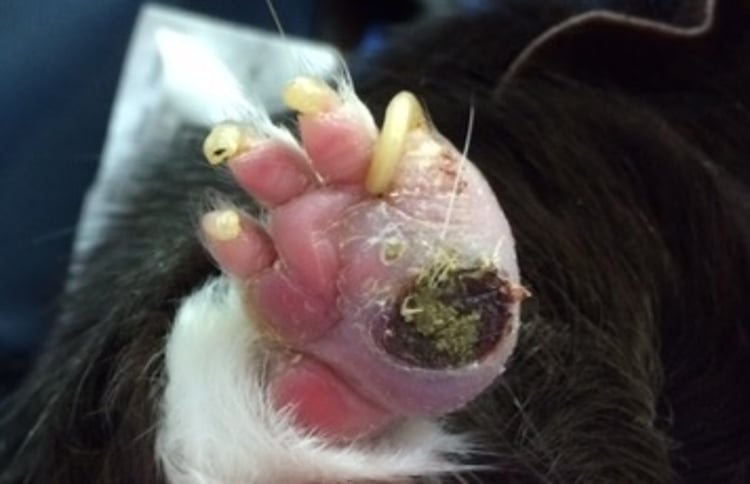
Severe pododermatitis on the front foot of a guinea pig.
Courtesy of Dr. Miranda Sadar.
Treatment for mild cases includes topical treatments, bandages, analgesia, vitamin C supplementation, and correction of husbandry or underlying causes (see ). Antimicrobials based on culture and susceptibility are indicated for severe cases. Advanced cases can require surgical debridement and possible amputation.


Foot bandages for treatment of pododermatitis in a guinea pig.
Courtesy of Dr. Miranda Sadar.
Neoplasia in Guinea Pigs
Spontaneous tumors are relatively uncommon in guinea pigs and are usually found in middle-aged (3 years old) or older animals. Trichofolliculoma, a benign tumor of the hair follicle epithelium, is the most common skin tumor in this species. The tumor presents as a slow-growing oval mass varying in diameter from 0.5 to 7 cm and located predominantly in the subcutis of the dorsal lumbar or sacral region or in the lateral femoral and lateral thoracic area. Males are affected twice as frequently as females, and the average age of affected animals is 3 years old.
Epidermoid cysts arising from hair follicles are often associated with these tumors or can arise independently. Ulcerating tumors and ruptured cysts discharge caseous material. Treatment of trichofolliculomas and epidermoid cysts is surgical excision. An alternative method has been reported using a local anesthetic and a minimally invasive combination of squeeze and punch incision technique (6).
Mammary gland neoplasia is reported in both sexes; however, there is a higher prevalence in males. Fibroadenoma, adenoma, and adenocarcinoma can be found, and malignancy is not uncommon. Clinical signs include swelling of one or both mammary glands, with or without discharge. Diagnostic imaging (including of the lungs) using radiographs or CT is recommended to evaluate for evidence of metastasis. Diagnosis is confirmed with biopsy, and surgical excision using wide margins and local lymph nodes is recommended, if possible. Skin flaps might be required because guinea pigs lack extra skin.
References
Sadar MJ, Gleeson M. Updates on cystic ovarian disease in guinea pigs. Vet Clin North Am Exot Anim Pract. 2025;28(1):149-163. doi:10.1016/j.cvex.2024.07.004
Edell AS, Vella DG, Sheen JC, Carotenuto SE, McKee T, Bergman PJ. Retrospective analysis of risk factors, clinical features, and prognostic indicators for urolithiasis in guinea pigs: 158 cases (2009–2019). J Am Vet Med Assoc. 2022;260(S2):S95-S100. doi:10.2460/javma.21.09.0421
Lewis TT, Lennox AM. Nonsurgical removal of urethral uroliths using a self-retaining retractor with elastic stays in female guinea pigs (Cavia porcellus): 16 cases (2006–2019). J Exot Pet Med. 2021;36(2):11-15. doi:10.1053/j.jepm.2020.09.006
Coutant T, Dunn M, Langlois I, Maccolini E. Cystoscopic-guided lithotripsy for the removal of a urethral stone in a guinea pig. J Exot Pet Med. 2019;28:111-114. doi:10.1053/j.jepm.2018.02.042
Rosas-Navarro J, Gaillot H, Agoulon A, et al. Epidemiological, clinical, radiographic, echocardiographic findings and outcome in client-owned guinea pigs (Cavia porcellus) with cardiac disease: 80 cases (2010–2021). J Am Vet Med Assoc. 2023;261(6):865-873. doi:10.2460/javma.22.10.0462
Loek R, Gardiner D, Laporte C. A conscious minimally invasive approach to the removal of a trichofolliculoma in an American guinea pig: a case study. Top Companion Anim Med. 2023,53-54:100771.doi:10.1016/j.tcam.2023.100771