Exudative epidermitis is a generalized staphylococcal infection that affects young pigs. Clinical signs include depression and reddening of the skin, followed by rapid spread of exudative, nonpruritic pustules. Diagnosis is based on clinical signs and confirmed by bacterial culture of lesions. Treatment with antimicrobials is most successful when combined with topical antiseptic sprays. Severely affected pigs might require fluids and electrolytes.
Exudative epidermitis is generalized dermatitis that occurs in pigs 5–60 days old. It is characterized by sudden onset, with a morbidity rate of 10–90% and a mortality rate of 5–90%. The acute form usually affects suckling piglets; a chronic form is more common in weaned pigs (see ).

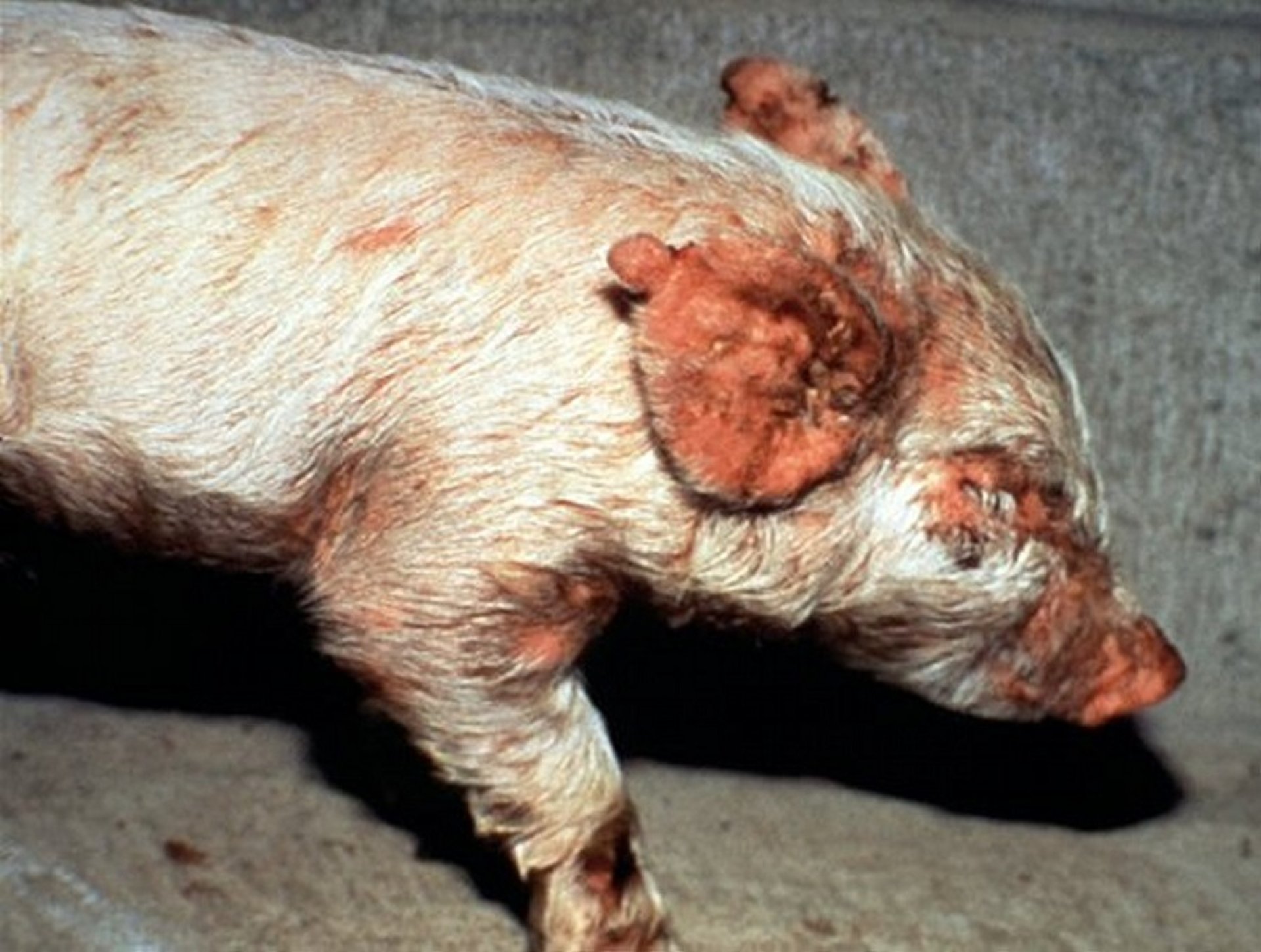
Chronic exudative epidermitis over the entire body in a 5-week-old weaner pig.
Courtesy of Dr. Ranald D. A. Cameron.
Exudative epidermitis has been reported from most swine-producing areas of the world.
Lesions of exudative epidermitis are caused by Staphylococcus hyicus. Other staphylococci (Staphylococcus sciuri, Staphylococcus chromogenes, Staphylococcus aureus) have also been sporadically implicated in outbreaks.
Some reports indicate an association between exudative epidermitis and ST398 methicillin-resistant S aureus (MRSA) infections (1); however, a causative role has yet to be clearly demonstrated.
Although S hyicus is best known as a swine pathogen, the organism also occurs commonly in birds and cattle, and a small number of infections in humans have been reported. Both virulent and avirulent strains of S hyicus exist, but they appear unable to penetrate intact skin.
Staphylococcal virulence in cases of exudative epidermitis is linked to the production of exfoliative toxins (five of which have been identified) that decrease cell-cell adhesion of keratinocytes in the stratum granulosum and stratum spinosum. Abrasions on the face, feet, and legs or lacerations on the body precede infection (see ). Such injuries are usually caused by fighting or by contact with abrasive surfaces such as new concrete.

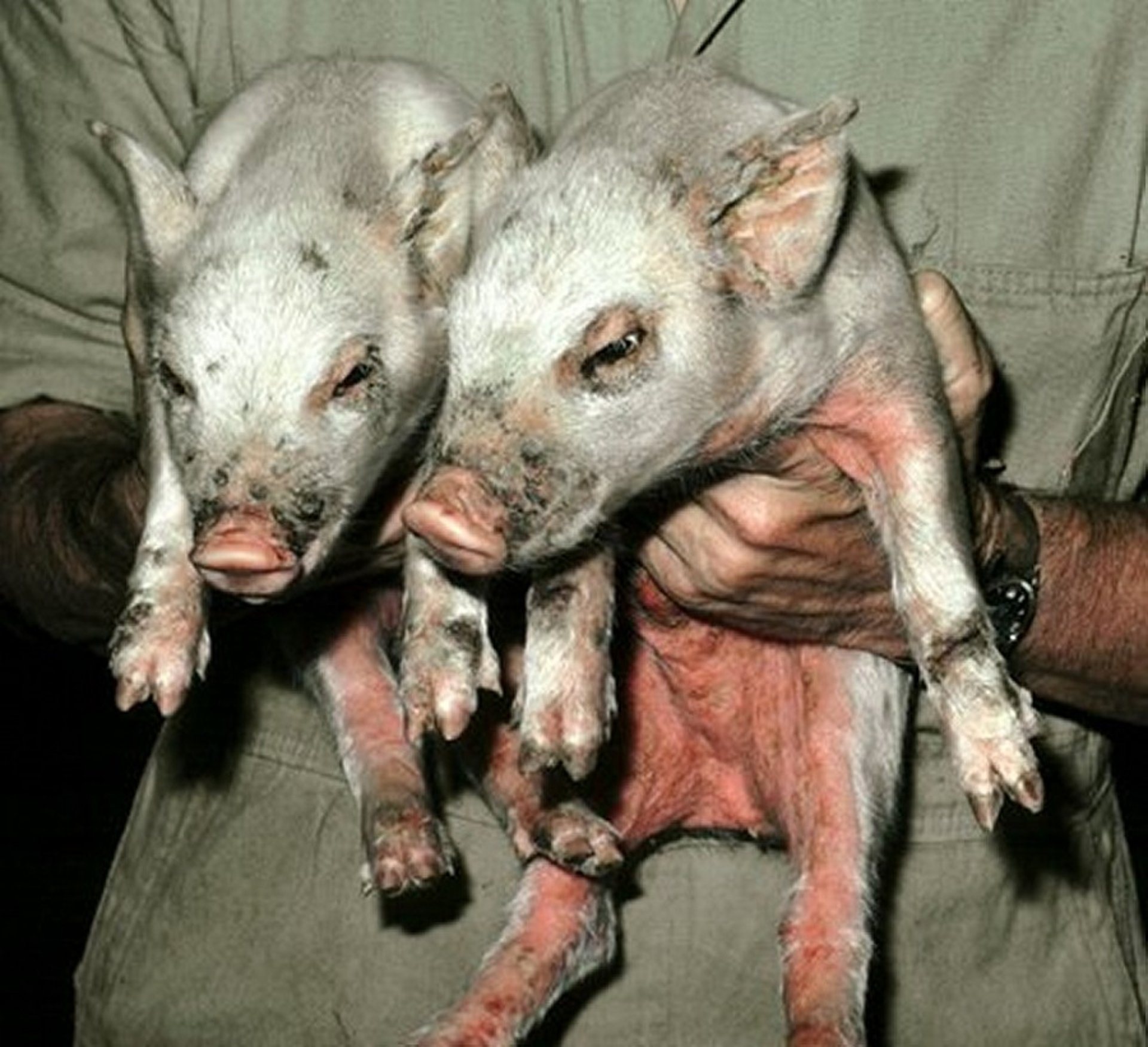
Subacute exudative epidermitis affecting the face, limbs, and ventral abdomen in suckling piglets. Note the hair loss, skin reddening, and blackened exudate.
Courtesy of Dr. Ranald D. A. Cameron.
Other predisposing factors that can affect the severity and progress of exudative epidermitis include immunity, hygiene, nutrition, and the presence of mange mites or anything that damages the skin. Mature sows that have acquired a high level of immunity from previous exposure provide protection to piglets via their colostrum.
The incidence of exudative epidermitis is often higher in gilt litters and, therefore, on newly established sow farms, where the parity structure skews younger for a period of time.
Pigs develop resistance to exudative epidermitis with age; however, S hyicus can be recovered from the skin of older pigs, the vagina of sows, and the preputial diverticulum of boars. These subclinical carriers are a source of contamination for naive herds.
Suckling pigs with exudative epidermitis are usually infected by their dams, in some cases during birth from sows with vaginal infections, or from contamination in the farrowing unit. Suckling piglets are the most commonly and severely affected, but cross-infection occurs after mixing at weaning, leading to a morbidity rate of up to 80%. However, the mortality rate is usually low in weaned pigs.
The incidence of exudative epidermitis appears to have increased because of high stocking densities and possibly earlier weaning. However, no seasonal pattern has emerged from retrospective analysis of diagnostic data.
Clinical Findings and Lesions of Exudative Epidermitis in Pigs
The first signs of exudative epidermitis are listlessness and reddening of the skin in one or more piglets in a litter. Affected pigs rapidly become depressed and refuse to eat. Body temperature might increase early in the disease; later, however, it is near normal. The skin thickens, and reddish-brown spots (macules) appear around the eyes, nose, lips, and ears, from which serum and sebum exude. The lesions increase in size and develop a vesicular or pustular appearance.
In pigs with exudative epidermitis, the body is rapidly covered with a moist, greasy exudate of sebum and serum that becomes crusty (see ); however, lesions are not pruritic. Vesicles and ulcers can also develop on the nasal disk and tongue.

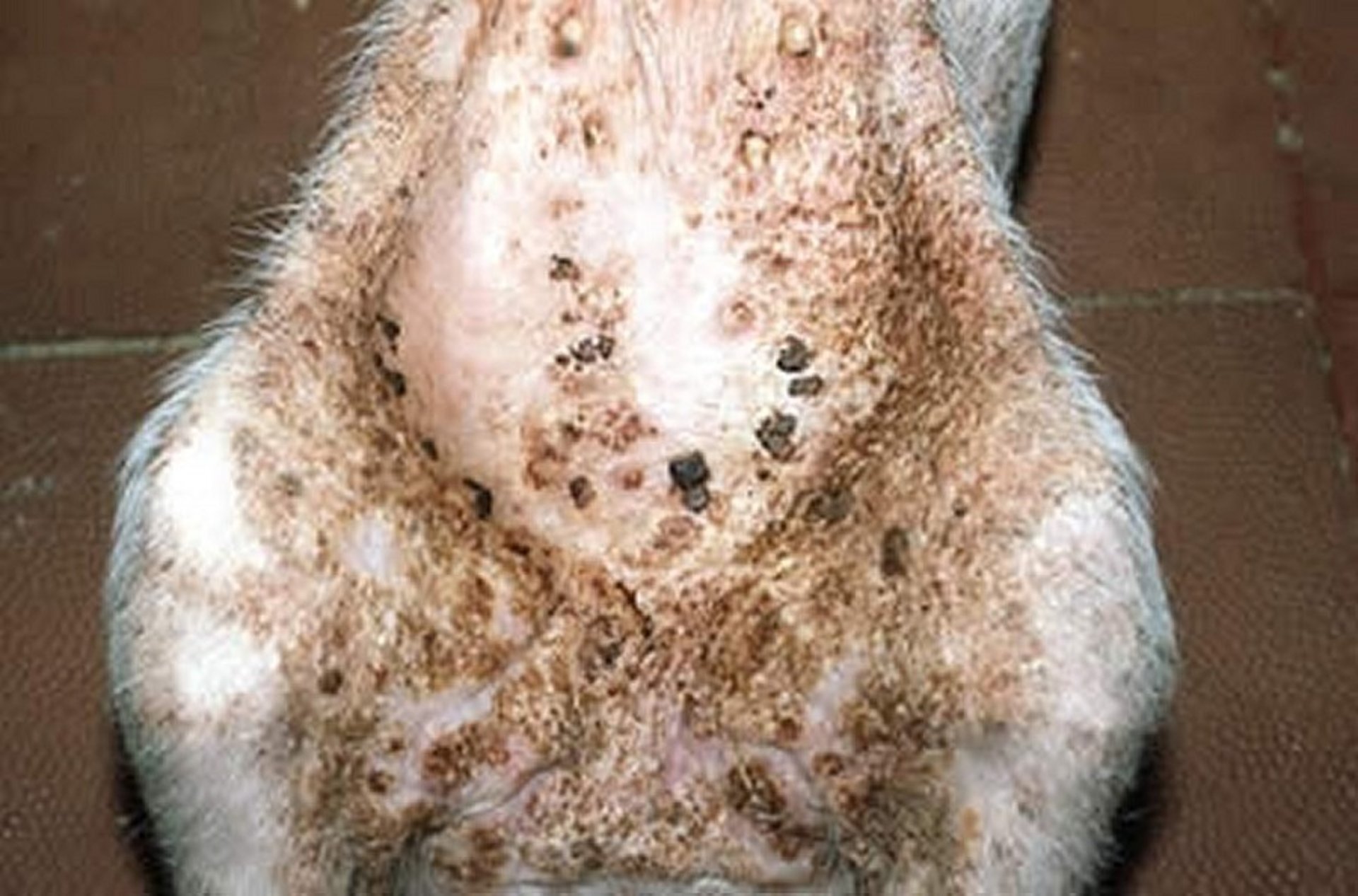
This young pig with exudative epidermitis shows the characteristic greasy lesion on the ventral abdomen.
Courtesy of Dr. Louise Bauck.
The feet are nearly always involved, with erosions at the coronary band and heel, in cases of exudative epidermitis. The hoof might be shed in rare cases. Occasionally, the shape and distribution of lesions are roughly circular and multifocal across the entire body, leading to confusion with other skin conditions in swine.
In acute exudative epidermitis, death can occur within 3–5 days. In older animals, the chronic form of the disease manifests as thick, crusty lesions over the entire body or as discrete circumscribed lesions that do not coalesce. The mortality rate is low except in very young suckling piglets. However, recovery is slow, growth is delayed, and these signs are often associated with diarrhea, emaciation, and dehydration.
Necropsy of pigs severely affected by exudative epidermitis reveals marked dehydration and inflammation of the peripheral lymph nodes. Distention of the kidneys and ureters with mucus, cellular casts, and debris is common in peracute and acute forms of the disease.
Diagnosis of Exudative Epidermitis in Pigs
Clinical signs
Bacterial culture
Usually, a presumptive diagnosis of exudative epidermitis can be based primarily on clinical signs. Bacterial culture of lesions can be used in the rare cases when confirmation is necessary or when bacterial isolate is desired for production of an autogenous vaccine.
Differential diagnoses include sarcoptic mange; diseases resulting from nutritional deficiencies, including parakeratosis (zinc deficiency); ringworm; and pityriasis rosea (porcine juvenile pustular psoriaform dermatitis).
Treatment and Control of Exudative Epidermitis in Pigs
Antimicrobials
Antiseptic sprays
Improved management
The causative organism of exudative epidermitis might be susceptible to many antimicrobials, including amoxicillin, ampicillin, erythromycin, lincomycin, penicillin, tylosin, trimethoprim-sulfonamide, aminoglycosides, and cephalosporins. However, antimicrobial resistance, particularly to beta-lactam antimicrobials, has been described, and treatment selection should be guided by antimicrobial culture and susceptibility testing.
Often, exudative epidermitis can be treated successfully with daily spraying of antiseptics (eg, 0.05% chlorhexidine solution, 1:50 dilution of 10% povidone-iodine solution) over the entire body surface. In severe cases, treatment requires antimicrobial administration at high dosages for 7–10 days early in the disease (2).
Because dehydration is a major feature of exudative epidermitis, administration of oral fluids and electrolytes is advisable for severely affected pigs. Treatment is less effective in very young pigs and ineffective in advanced cases.
In severe outbreaks of exudative epidermitis, both affected pigs and in-contact pigs should be sprayed with antiseptics. If an outbreak is severe enough, in-contact pigs can also be given antimicrobials for several days.
Pearls & Pitfalls
|
Sows that are about to farrow, as well as their housing, should be thoroughly disinfected in the face of exudative epidermitis outbreaks. Good hygiene in weaner accommodations and strategic in-water or in-feed medication for 3–5 days, together with appropriate ventilation to avoid high humidity, helps to control outbreaks after weaning.
Other procedures that can decrease the severity of exudative epidermitis outbreaks include clipping the needle teeth of neonatal pigs, providing soft bedding, segregating affected animals into a single pen at weaning, and avoiding mixing of animals to decrease the possibility of skin lesions due to fighting.
Autogenous bacterins have been used with some success to decrease the incidence of exudative epidermitis in chronically infected herds.
Key Points
Exudative epidermitis is a common staphylococcal infection of young pigs, characterized by widespread, nonpruritic pustules.
Treatment is daily antiseptic spraying of the skin, or systemic antimicrobials when necessary and as guided by susceptibility results.
Management practices that decrease the chance of skin abrasion and promote facility hygiene can help control outbreaks.
For More Information
Staphylococcus spp. In: Zimmerman JJ, Burrough ER, Karriker LA, Schwartz KJ, Zhang J, eds. Diseases of Swine. 12th ed. John Wiley & Sons; 2026:1089-1096.
Neumann EJ, Ramirez A, Schwartz KJ, eds. Greasy pig disease. In: Swine Disease Manual. 5th ed. American Association of Swine Veterinarians; 2020:27-28.
References
Khairullah AR, Kurniawan SC, Effendi MH, et al. A review of new emerging livestock-associated methicillin-resistant Staphylococcus aureus from pig farms. Vet World. 2023;16(1):46-58. doi:10.14202/vetworld.2023.46-58
Neumann EJ, Ramirez A, Schwartz KJ, eds. Greasy pig disease. In: Swine Disease Manual. 5th ed. American Association of Swine Veterinarians; 2020:27-28.