The aflatoxins are toxic and carcinogenic metabolites of Aspergillus spp (Aspergillus flavus, A parasiticus, and others) that affect poultry as well as other animals. See .

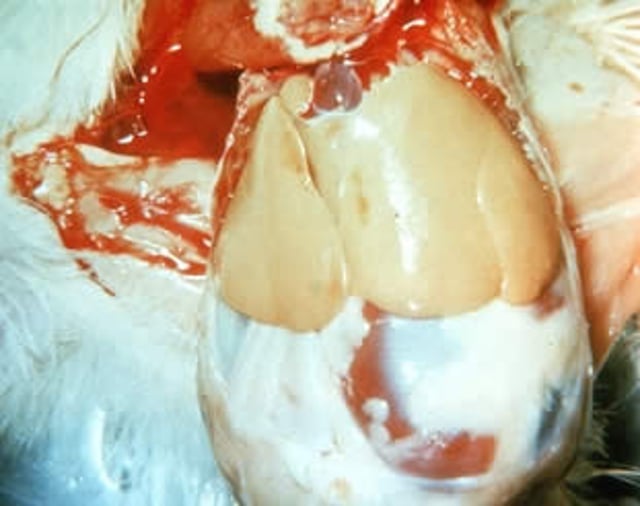
Fatty deposition in the liver of a broiler chicken with aflatoxicosis.
Courtesy of Dr. Jean Sander.

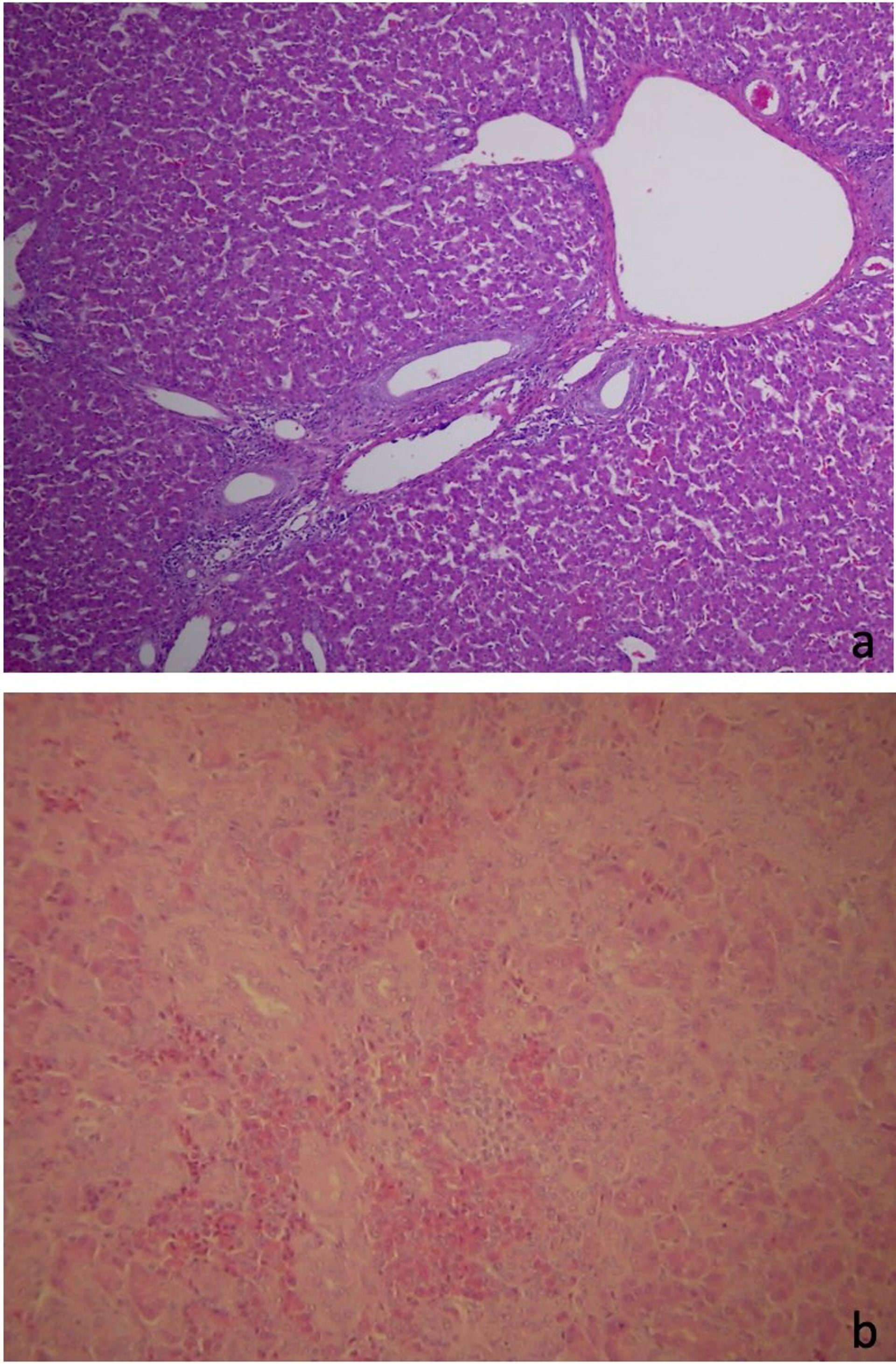
Micrographs of a) normal liver and b) liver affected by severe aflatoxin-induced bile duct hyperplasia.
Courtesy of Dr. Susan M. Williams.
Aflatoxicosis in poultry primarily affects the liver but can involve immunologic, digestive, and hematopoietic functions (see ). Aflatoxicosis adversely affects the following:
weight
feed intake
feed conversion efficiency
pigmentation
processing yield
egg production and eggshell quality
male and female fertility
hatchability
Susceptibility to aflatoxins varies; however, in general, ducklings, turkeys, and pheasants are susceptible, whereas chickens, quail, and guinea fowl are relatively resistant.
Aflatoxicosis causes the following:
general unthriftiness, with high morbidity and mortality rates possible
lesions in the liver, with reddening due to necrosis and congestion or yellowing due to lipid accumulation
hemorrhages in liver and other tissues
Aflatoxins are carcinogenic; however, tumor formation is rare with natural disease, probably because the animals do not live long enough for this to occur.