Nonprotein nitrogen (NPN) toxicosis results from excessive consumption of sources of NPN or urea. Ruminants are more susceptible than monogastric animals. NPN toxicosis is acute and often rapidly fatal. Clinical signs include muscle tremors, abdominal pain, incoordination, respiratory distress, recumbency, and then death. Diagnosis can be based on analysis of postmortem samples for ammonia content and of suspected sources (such as urea in fertilizers) for NPN content. Ruminal pH > 7.5 supports the diagnosis. Treatment includes the removal of suspected source materials, ruminal infusion of acetic acid and cold water, and supportive care.
Poisoning by ingestion of excess nonprotein nitrogen (NPN) from urea in fertilizers or from other sources is usually acute, rapidly progressive, and highly fatal. NPN is any source of nitrogen not present in a polypeptide (precipitable protein) form. NPN sources have different toxicities in various species; mature ruminants are the most commonly affected.
After ingestion of urea or NPN from another source, the compound undergoes hydrolysis catalyzed by urease and releases excess ammonia (NH3) into the GI tract, which is absorbed and leads to hyperammonemia.
Etiology of Nonprotein Nitrogen Toxicosis
Ruminants use nonprotein nitrogen by converting it via microorganisms to ammonia, which is then combined with carbohydrate-derived keto acids to form amino acids.
The most common NPN sources in feed are urea, urea phosphate, ammonia (NH3), and salts such as monoammonium phosphate and diammonium phosphate. Because feed-grade urea is unstable, it is formulated (usually pelleted) to prevent degradation to NH3.
Biuret, a less toxic source of NPN, is currently included in feed less frequently than in the past. Natural protein sources such as rice hulls, beet or citrus pulp, cottonseed meal, and straw or other low-quality forages may be treated with anhydrous ammonia to increase available nitrogen in supplemented livestock diets.
Most NPN sources are provided to ruminants by means of direct addition of dry supplements to a complete mixed or blended diet, via free-choice access to NPN-containing range blocks or cubes, or as supplements combined with molasses in lick tanks.
Ammonia or NPN toxicosis is a common sequela of an abrupt change to urea or other NPN in the diet when only natural protein was previously fed. Animals should be gradually acclimated to NPN so that the rumen microbiota can adjust. Furthermore, animals on farms can be exposed to liquid fertilizers or ingest dry granular fertilizers containing ammonium salts or urea (1).
Ruminant species are the most susceptible to developing NPN toxicosis because urease is normally present in the rumen after the animal is 50 days old. Dietary exposure of unacclimated ruminants to 0.3–0.5 g/kg of urea can cause adverse effects; dosages of 1–1.5 g/kg are usually lethal (2, 3).
Urease activity in the equine cecum is approximately 25% that of the rumen, and horses may receive NPN as a feed additive. However, horses are more susceptible to urea than are other monogastric species, and dosages ≥ 4 g/kg can be lethal (4).
Ammonium salts at dosages of 0.3–0.5 g/kg can be toxic in all species and ages of farm animals; dosages ≥ 1.5 g/kg usually are fatal.
Pigs and neonatal calves might show transient diuresis after ingesting urea; otherwise, they are generally unaffected. Wild birds (eg, silver gulls) reportedly have developed NPN toxicosis after consuming water contaminated with urea fertilizers (5).
Ruminants might require days to weeks for total adaptation before the rumen microbiota can use gradually increasing amounts of dietary urea or other NPN. However, such adaptation is lost relatively quickly (within 1–3 days) after NPN is removed from the diet.
Diets low in energy and high in fiber are more commonly associated with NPN toxicosis, even in acclimated animals. Highly palatable supplements (such as liquid molasses or large protein blocks), range cubes, or improperly maintained lick tanks can lead to the consumption of lethal amounts of NPN.
A related CNS disorder in cattle fed ammoniated high-quality hay, silage, molasses, and protein blocks is thought to be caused by the formation of 4-methylimidazole (4-MEI) via the action of NH3 on soluble carbohydrates (reducing sugars) in these feedstuffs.
Cattle that are fed dietary components containing 4-MEI develop bovine bonkers syndrome, named for the wildly aberrant behavior they exhibit. Clinical signs of bovine bonkers syndrome include stampeding, ear twitching, trembling, champing, salivating, and seizures. Nursing calves can be affected, suggesting that the toxic component is excreted in milk (6).
Ammoniated low-quality forages do not have sufficient concentrations of reducing sugars to form 4-MEI, so they are a relatively safe nitrogen source for acclimated animals.
Clinical Findings of Nonprotein Nitrogen Toxicosis
The period from urea ingestion to the onset of clinical signs of nonprotein nitrogen toxicosis is generally 20–60 minutes in cattle, 30–90 minutes in sheep, and longer in horses. Early clinical signs include muscle tremors (especially of the face and ears), abdominal pain, frothy salivation, polyuria, and bruxism. Tremors progress to incoordination and weakness. Pulmonary edema leads to marked salivation, dyspnea, and gasping.
Horses with NPN toxicosis might exhibit head pressing. Affected cattle are often agitated, hyperirritable, aggressive, and belligerent as the toxicosis progresses. Affected sheep usually appear depressed.
An early sign of NPN toxicosis in cattle is ruminal atony. As the toxicosis progresses, ruminal tympany is usually evident on auscultation, and violent struggling and bellowing, a marked jugular pulse, severe twitching, tetanic spasms, and seizures can occur.
Affected cattle with belligerent aberrant behavior might have produced some 4-MEI in vivo through the reaction of excessive NH3 (released from NPN) with carbohydrates and reducing sugars in the rumen. The PCV and serum concentrations of NH3, glucose, lactate, potassium, phosphorus, and BUN, as well as the activities of AST and ALT, are usually considerably increased.
As death nears, animals with NPN toxicosis become cyanotic, dyspneic, anuric, and hyperthermic, with blood pH decreasing from 7.4 to 7.0. Regurgitation can occur, especially in sheep.
Death related to NPN toxicosis usually occurs within 2 hours of ingestion in cattle, 4 hours in sheep, and 3–12 hours in horses. Surviving animals recover in 12–24 hours, with no apparent sequelae.
Pearls & Pitfalls
|
Lesions of Nonprotein Nitrogen Toxicosis
Carcasses of animals that die as a result of NPN, urea fertilizer, or raw soybean toxicosis (see ) appear to bloat and decompose rapidly, with no specific characteristic lesions. Gross brain lesions are not usually reported in NPN toxicosis; however, histopathological lesions can include neuronal degeneration, spongy degeneration of the neuropil, and congestion and hemorrhage in the pia mater.

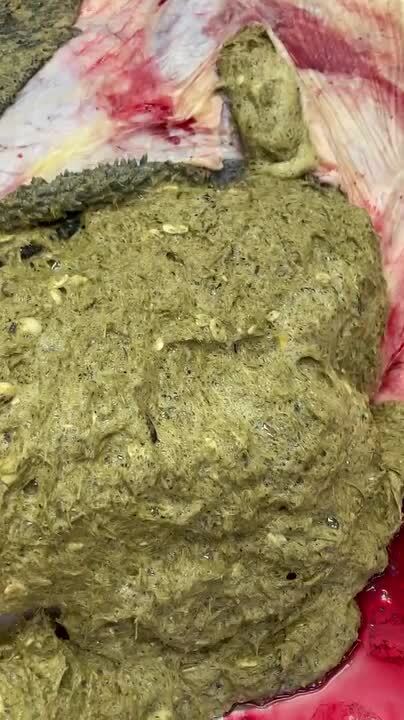
Frequently, pulmonary edema, congestion, and petechial hemorrhages accompany cases of NPN toxicosis. Mild bronchitis and catarrhal gastroenteritis are often reported. Regurgitated and inhaled rumen contents are commonly found in the trachea and bronchi, especially in sheep.
At necropsy, the odor of NH3 may or may not be apparent in ingesta of a freshly opened rumen or cecum in an animal with NPN toxicosis.
A ruminal or cecal pH ≥ 7.5 in a recently dead animal is highly suggestive of NPN toxicosis. The ruminal pH remains stable for several hours after death under most circumstances; in cases of NPN toxicosis, however, ruminal pH continues to increase (2).
Pearls & Pitfalls
|
Diagnosis of Nonprotein Nitrogen Toxicosis
History and clinical evaluation, including testing of ammonia concentration in postmortem samples
Testing of feedstuffs, fertilizer, or water for urea
Ruminal or cecal pH > 7.5
A diagnosis of nonprotein nitrogen toxicosis (ammonia toxicosis) is suggested by a history of dietary exposure, clinical signs including those of acute illness, and representative gross and histopathological lesions.
Exposure to excess NPN can be determined via laboratory analysis for ammonia nitrogen (NH3-N) concentration in both antemortem and postmortem specimens and for the presence of urea or other types of NPN in suspected feeds and other dietary sources. Specimens for NH3-N analysis include ruminal-reticular fluid, serum, whole blood, and urine.
Because of the volatile nature of ammonia, all NH3-N analysis specimens should be frozen immediately after collection and thawed at the time of analysis. Alternatively, ruminal-reticular fluid may be preserved with a few drops of saturated mercuric chloride solution added per 100 mL. Animals dead more than a few hours in hot ambient temperatures or ≥ 12 hours in moderate climates typically undergo too much autolysis to be of diagnostic value for necropsy examination.
Pearls & Pitfalls
|
The amount of urea or the equivalent NPN concentration in biological specimens is difficult to interpret; however, urea and NPN concentrations should be determined in representative samples of feeds and other dietary sources. Values for urea and NPN in feed permit calculation of the protein equivalent in feed, as well as the total estimated dose of NPN ingested: 1 part protein = 0.36 part urea; 1 part urea = 2.92 parts protein.
NH3-N concentrations ≥ 2 mg/100 mL in vitreous or aqueous humor indicate excess NPN exposure. Clinical signs usually appear at NH3-N concentrations of approximately 1 mg/100 mL. The concentration of NH3-N in ruminal-reticular fluid is> 80 mg/100 mL in most cases of NPN toxicosis, and it can be > 200 mg/100 mL.
Acclimated ruminants that are fed diets high in legume hay, soybean meal, cottonseed meal, linseed meal, fish meal, or milk by-products can have NH3-N concentrations in rumen fluid approaching 60 mg/100 mL with no apparent signs of toxicosis.
The pH of ruminal-reticular fluid should also be determined. A pH of 7.5–8 (at the time of death) supports a diagnosis of NPN toxicosis.
Differential diagnoses for NPN toxicosis include the following:
toxicoses due to ingestion of nitrate or nitrite, cyanide, organophosphate or carbamate pesticides, excess raw soybeans (an important source of urease, leading to quicker breakdown of urea), 4-MEI, lead, or chlorinated hydrocarbon pesticides; or to exposure to toxic gases (eg, carbon monoxide, hydrogen sulfide, nitrogen dioxide)
acute infectious and noninfectious diseases such as encephalopathies (eg, leukoencephalomalacia, hepatic encephalopathy, polioencephalomalacia), enterotoxemia or rumen autointoxication, protein engorgement, grain engorgement, ruminal tympany, and pulmonary adenomatosis
nutritional and metabolic disorders related to hypocalcemia or hypomagnesemia
Treatment of Nonprotein Nitrogen Toxicosis
Removal of the suspected source of nonprotein nitrogen
Ruminal infusion of 5% acetic acid and water
Supportive care
Examination and treatment for nonprotein nitrogen toxicosis can be difficult because of sudden and violent behavior. Animals that are recumbent and moribund usually do not respond favorably to treatment.
If possible, animals with NPN toxicosis should be treated with ruminal infusion of 5% acetic acid (vinegar, 0.5–2 L/animal in sheep and goats and 2–8 L/animal in cattle). Ruminal-reticular fluid specimens for analysis should be obtained before acetic acid therapy. Concomitant infusion of iced (0–4°C [32–39.2°F]) water (up to 40 L/animal in adult cattle, proportionally less in sheep and goats) is also recommended (2, 7).
Acetic acid lowers rumen pH and prevents further absorption of NH3 by converting uncharged NH3 to the charged ammonium ion (NH4+). Administration might have to be repeated if clinical signs recur. Cold water decreases the rumen temperature and dilutes the reacting rumen media, thereby slowing urease activity.
In severely affected, valuable animals, removed rumen contents should be replaced with a hay slurry, and rumen contents transferred from a healthy animal can serve as an inoculum to help restore normal function.
Supportive care for NPN toxicosis includes IV fluid therapy (isotonic saline solution) to correct dehydration, and IV administration of calcium gluconate and magnesium solutions to relieve tetanic seizures. If calcium gluconate or magnesium solutions are administered to production animals, withholding times must be respected, and treated animals should not go to rendering unless cleared by the rendering company on the basis of documentation from the producer and attending veterinarian. Seizures may also be controlled with sodium pentobarbital or other injectable anesthetic agents.
Prevention and Control of Nonprotein Nitrogen Toxicosis
Urea should not be fed at a rate exceeding 2–3% of the concentrate or grain portion of ruminant diets and should be limited to ≤ 1% of the total diet. In addition, nonprotein nitrogen should constitute no more than one-third of the total nitrogen in the ruminant diet.
Pearls & Pitfalls
|
Once the decision has been made to feed NPN, animals must be slowly adapted to and maintained on a consistent dietary NPN content with no substantial deviations. For example, cows fed range cubes with NPN must receive the cubes daily, with no interruptions.
Overconsumption of palatable liquid supplements can be controlled via the addition of phosphoric acid; 1% phosphorus from phosphoric acid should restrict consumption of liquid supplement to approximately 1 kg/animal per day.
Although properly adapted adult cattle can tolerate urea at a rate of up to 1 g/kg body weight per day, it is safer not to exceed 0.5 g/kg body weight per day.
Key Points
NPN compounds (eg, feed additives, fertilizers) release ammonia into the GI tract, leading to acute toxicosis if the amount consumed is too high. The feeding of raw soybeans, which contain higher urease activity, can cause the quick release of ammonia even from normal amounts of urea.
Ruminants are more susceptible than monogastric animals. Clinical signs include muscle tremors, abdominal pain, incoordination, respiratory distress, recumbency, and death.
Diagnosis is based on testing of postmortem specimens for ammonia concentration and of feed to detect levels of urea or NPN sources. Rumen pH > 7.5 supports a diagnosis of NPN toxicosis.
For More Information
Also see pet owner content regarding nonprotein nitrogen poisoning.
References
Villar D, Schwartz KJ, Carson TL, Kinker JA, Barker J. Acute poisoning of cattle by fertilizer-contaminated water. Vet Hum Toxicol. 2003;45(2):88-90.
Osweiler GD, Carson TL, Buck WB, Van Gelder GA. Urea and nonprotein nitrogen. In: Osweiler GD. Clinical and Diagnostic Veterinary Toxicology. 3rd ed. Kendall/Hunt; 1985:160-166.
Bartley EE, Davidovich AD, Barr GW, et al. Ammonia toxicity in cattle. I. Rumen and blood changes associated with toxicity and treatment methods. J Anim Sci. 1976;43(4):835-841. doi:10.2527/jas1976.434835x
Hintz HF, Lowe JE, Clifford AJ, Visek WJ. Ammonia intoxication resulting from urea ingestion by ponies. J Am Vet Med Assoc. 1970;157(7):963-966. doi:10.2460/javma.1970.157.07.963
Raidal SR, Jaensch SM. Acute poisoning of silver gulls (Larus novaehollandiae) following urea fertilizer spillage. Avian Pathol. 2006;35(1):38-41. doi:10.1080/03079450500465718
Haliburton JC, Morgan SE. Nonprotein nitrogen-induced ammonia toxicosis and ammoniated feed toxicity syndrome. Vet Clin North Am Food Anim Pract. 1989;5(2):237-249. doi:10.1016/s0749-0720(15)30974-9
Word JD, Martin LC, Williams DL, et al. Urea toxicity studies in the bovine. J Anim Sci. 1969;29(5):786-791. doi:10.2527/jas1969.295786x